Event 1
Overseas assassination and Sasha's death
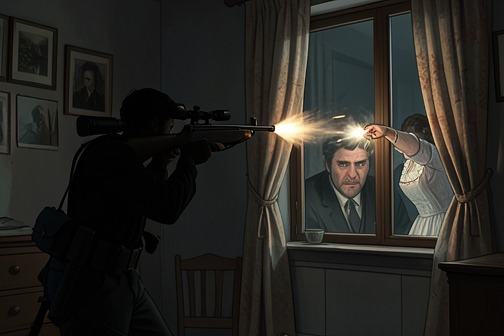
The overseas assassination and [Sasha](entity:character-recall-character-sasha-68f2c50e2ffd)’s death mark the point at which [Will Robie](entity:character-recall-character-will-robie-49c73e14ccc9)’s practiced control collides with an outcome he never intended: one carefully placed shot kills both its target and a child. The mission succeeds in its immediate objective, but the unintended death changes its meaning for Robie and becomes a wound he cannot dismiss as collateral damage.
## The Shot and Its Unintended Consequence
Robie carries out the operation from a concealed position with a clear view into the target’s home. A maid has been placed at the window as part of the plan; when the curtains part, Robie waits for her to move so that his line of sight will be clear. Her hesitation matters. If she remains in place, the operation could fail, and Robie himself might be left exposed without official acknowledgment of his presence. When she finally steps away, the view opens again.
A remote computer connection has engaged the target in a call. As the man comes into view, Robie settles on the trigger, the decisive point at which he can still stop himself. He notices movement to the target’s right but fires anyway, following the trained, measured action of a familiar routine. He keeps watching through his optics to verify the result. The target falls, apparently confirming the mission’s success—until Robie sees Sasha behind him, where the movement had come from. The bullet has continued beyond its intended target and killed her as well. The outcome is not a failed shot in the ordinary sense: the intended man is dead, but so is someone Robie had never meant to harm.</body_en
## The Aftermath and the Meaning of Collateral Damage
The operation’s remote communications offer Robie no real account of how the child came to be behind the target. He knows the maid completed her role and escaped, while the people managing the mission try to frame its outcome positively. He sends a message asking how it happened. The reply is stark: “UNCLEAR. HIS DAUGHTER. CLASSIFIED AS COLLATERAL DAMAGE.” It identifies the girl as the target’s daughter but leaves the central question unresolved. The bureaucratic classification names the loss without explaining it; for Robie, the child’s death is not settled by the mission’s success or by the language used to contain its consequences.
What remains in his mind is the girl’s face and her curly dark hair. He recognizes that intention cannot undo the result: she is dead, and nothing can bring her back. His demand to know how the shooting happened is therefore both an operational question and an attempt to confront a fact he cannot make acceptable. The label collateral damage may serve the institution’s accounting, but it cannot turn the child into an abstraction for the person who pulled the trigger.
On the flight afterward, Robie throws up—not because of turbulence, but because the image of the girl overwhelms him. The controlled operative who has always had to remain unflappable feels himself coming apart, and his gaze fixes on the callused trigger finger shaped by years of practice. He wonders whether this is the moment to leave the work. His own answer comes as a possibility rather than a settled decision: he may have found the reason to walk away. The assassination thus ends not with the confirmed death of its intended target, but with Robie’s confidence in his profession and in his capacity to continue it abruptly in question.
## The Target and the Mission’s Frame
The man Robie was sent to kill had been designated a Category Alpha enemy by an important, though shifting, ally of the United States. The designation placed him among people expected to meet violent ends, while the operation itself was conducted through remote communications: the call was engaged by computer, with no living person on the other end. After Robie fired, the target fell with the receiver still in his hand; the bullet’s passage left no one alive at either end of the call. That image gives the mission a starkly closed circuit, but the child’s appearance behind the target breaks the operation’s controlled frame. The objective had been defined in political and operational terms; its consequence could not be kept within them.
## Precision, Deniability, and the Cost of Control
The operation is built from small controls intended to make a distant killing predictable. From a vacant building with a direct sight line into the target’s home, Robie uses the windowsill as a fulcrum and limits how far the rifle’s muzzle extends beyond the glass, marking a red stop line on the barrel. The maid’s position is another necessary part of the plan: she has to move away from the window before the view clears. Even this carefully arranged interval carries a risk that the plan cannot master. If she freezes, the operation may fail, she may die, and Robie may be left to face consequences without official acknowledgment of his presence.
That tension between meticulous preparation and uncontrollable consequence gives the shooting its particular force. Robie sees movement beside the target, yet training and the mission’s timing carry him through the trigger pull. His familiar procedure does exactly what it is designed to do: the bullet reaches the intended man. But the same bullet also kills Sasha, revealing that accuracy can secure the stated objective without controlling the full outcome. The distinction is not between a successful and an unsuccessful shot; it is between a shot that meets its assigned purpose and one whose consequences exceed that purpose.
The scene also places distance on both sides of the act. The target’s call is engaged by computer, with no living person at the other end, and Robie is physically separated from the home by the street and his optics. Yet he watches the bullet’s flight and the deaths it causes; distance does not spare him from witnessing what his work has done. The mission’s language can classify Sasha’s death, and the institution can deny its connection to Robie, but neither measure erases his direct knowledge of the child he killed. The assassination therefore establishes a limit to the professional idea of control: the shot can be planned, executed, and confirmed, while responsibility for its unforeseen consequence remains with the person who fired it.
Event 2
Robie freezes during the birthday-party assassination mission
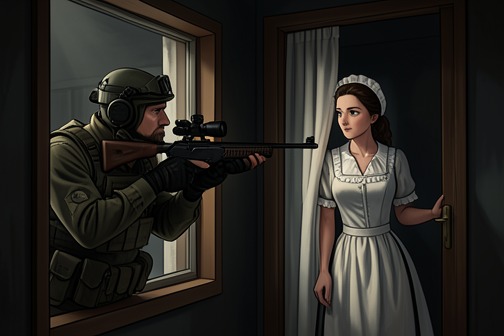
[Will Robie](entity:character-recall-character-will-robie-49c73e14ccc9)’s birthday-party assassination mission turns on a split second in which the trained sniper cannot pull the trigger. The target is killed by a backup team, but Robie’s failure to act—and the child he mistakenly believes he sees—ends his confidence in his ability to work in the field.
## The Mission and Its Stakes
The operation is built around a carefully arranged sight line into the target’s home. Robie fires from a vacant building across the street, working a rifle through a window raised only two inches; a red line on the barrel marks how far its muzzle may extend beyond the glass. The dark night and sparse ambient light help conceal the weapon. The plan depends, however, on a maid being in exactly the right place. When the curtains part, she lingers at the window and seems to look toward Robie’s building. Her hesitation threatens the entire operation: if she freezes, the target may survive, while she and Robie could both die. The United States would disavow any connection to him.
The gathering is a birthday party for a powerful man in an impoverished country. Wealth has brought him limousines and a place among the country’s elite, but, as the narrative makes clear, his fortune came from plundering the country. That alone is not why Robie has been sent to kill him: the decisive cause is the target’s funding of terrorist activities that struck the United States and its allies. The target is celebrating his fifty-eighth birthday, though Robie’s mission is intended to make it his last. The contrast between the party’s display of wealth and the poverty around it frames the operation as both a political act and a lethal intervention.
As the party begins, [Randy Gathers](entity:character-recall-character-randy-gathers-efc4ef1769b9) moves behind and to the right of Robie, using the same opening to watch the bullet’s path through his scope. The shot will take nearly five seconds to reach its target. There may be time for Gathers to call adjustments before it lands, but a miss could leave no chance for a follow-up: guests would scatter and the target’s people would rush him to safety. When the target arrives and takes his place at the head of the table, the operation reaches its prepared firing point. For all the planning, the decisive uncertainty is no longer the sight line or the timing, but whether Robie can complete the shot.
## The Child and the Frozen Trigger
At the instant Robie is about to touch the trigger, a little boy runs across the room and raises his arms to the target. The man picks him up and cradles him against his chest. The apparent child transforms a planned killing into the prospect of killing a child as well: Robie’s finger stops a millimeter from the trigger. Gathers, crouched beside him, urges him to fire, but the command cannot break the hesitation. The mission’s decisive turn comes not from a missed calculation but from Robie’s refusal—or inability—to make the shot while the boy is in the man’s arms.
A shot rings out, and seconds later glass tinkles as the target falls from his chair, mortally wounded. Robie looks away from the optics and down at his finger: it never touched the trigger. The operation succeeds in killing its target, but not through the act Robie was ordered to perform. Later, Gathers explains that a backup team had been in place in case Robie did not take the shot. The distinction matters to Robie, who had been told that Gathers would fire if he failed; the backup’s intervention preserves the mission’s outcome while confirming that Robie himself froze.
## Aftermath and Retrospective Meaning
The mission’s failure follows Will Robie beyond the party. On the [Arlington Memorial Bridge](entity:location-recall-location-642219d6be0d), looking down at the Potomac, he recognizes that he had seen a child where there was no child and apparently hallucinated in the middle of an operation. His hands are trembling, and the “cold zero” he expected—the state in which he could act without hesitation—never came. What had seemed, in the moment, like a decision not to risk a child’s life now presents itself as a failure in his perception and control.
The professional consequence is immediate: Robie has been placed on leave and will not return to field work unless he can get his mind straightened out. He measures the crisis against the work that gives his life its shape; if he cannot do the job, he fears, he is nothing. The assassination’s outcome cannot settle that question. The target is dead, but Robie did not fire, and the backup team’s intervention does not restore his confidence in his own ability to act.
Looking into the water, Robie understands the image that interrupted him as a displacement of [Sasha](entity:character-recall-character-sasha-68f2c50e2ffd). He had taken her face, changed her gender in his mind, moved her a thousand miles away, and given her another father: a reason not to shoot. The revelation makes the apparent child both an imagined obstacle and the return of a loss he had not mastered. Robie also recognizes a contradiction in the scene as he remembers it: his scope had been aimed above the target’s head, so he should not have been able to see a child in the target’s arms. The mission thus ends not simply with a botched shot, but with Robie confronting how grief has entered the act on which his professional identity depends.
## Extraction and the Backup Plan
The shot is followed not by a clean resolution but by the order to withdraw: the voice in Robie’s ear calls, “Egress, egress!” and Randy Gathers is already pulling him to his feet. The backup team has secured the target’s death, but Robie still has to be taken out of the firing position after failing to act. Later, opposite Robie on a bunk in their cramped quarters, Gathers nervously acknowledges that he had been under strict orders and apologizes. The contingency that saved the operation therefore marks a limit as well as a safeguard: the mission could continue without Robie’s shot, but its success cannot undo the moment when he could not fire.
Event 3
Victoria provides an alibi for Sherman Clancy
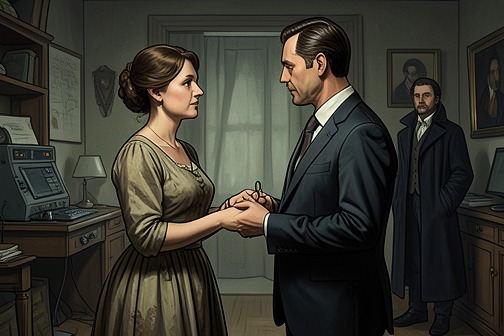
[Victoria](entity:character-recall-character-victoria-fef24d0cf051)’s alibi for [Sherman Clancy](entity:character-recall-character-sherman-clancy-e1eb33939f61) was both a decisive intervention in his murder trial and a carefully constructed cover for her own crime. She testified that she had been with Clancy on the night [Janet Chisum](entity:character-recall-character-janet-chisum-d1bc41d9e78b) was killed, helping keep an innocent man from being convicted of Janet’s murder while concealing that he had unknowingly provided her with an alibi.
## The Trial and the Testimony
Clancy was accused of killing Janet after admitting that he had paid her for sex. The prosecution’s theory was that he had wanted something Janet refused to give him, become angry, and killed her, possibly while drunk. The case carried the possibility of a death sentence. Victoria eventually came forward to say that she had been with Clancy from eight that evening until six the next morning. She described their time together as talking and drinking, and denied that they had slept together.
Her account arrived late, after she had initially denied to police that she was with Clancy. The delay made the testimony contentious: [Dan Robie](entity:character-recall-character-dan-robie-99bdd243c52e), her husband, was the judge in the case, and Clancy was already someone Dan disliked. Victoria understood that the town—and possibly her husband—would assume she had been sexually involved with Clancy. She was also afraid to disclose an overnight meeting with a man whose relationship with Dan was hostile. Yet as the trial moved toward a possible conviction, she decided that the risk of public humiliation was less important than preventing the state from executing someone she knew had not killed Janet.
## What the Alibi Appeared to Mean
At first, the testimony looked like an act of conscience. Victoria said she did not care for Clancy, but could not let [Mississippi](entity:location-recall-location-mississippi-4cc81eb48f93) execute him for a crime he had not committed. She also recognized that convicting him would leave Janet’s real killer uncaught. After she testified, her earlier lie to police was acknowledged, but the authorities did not pursue it. The account of her having spent the night with Clancy was accepted as a reason to doubt the prosecution’s case, even as it exposed her to gossip and strained her marriage.
The testimony also made Victoria appear to be Clancy’s alibi. That understanding concealed the crucial reversal. Years later, she explained that she had arranged to meet Janet in [Biloxi](entity:location-recall-location-biloxi-7b8b503c9fc0), left [Tyler Robie](entity:character-recall-character-tyler-robie-51f90085dd8f) with [Priscilla](entity:character-recall-character-priscilla-4c0f8c1856b2), returned to [Cantrell](entity:location-recall-location-cantrell-34566b0c2c27), and gone to Clancy’s home by prior arrangement. Clancy expected them to be alone. Victoria let him drink while pouring her own drink away, acted flirtatiously, and slipped a sleeping pill into his glass. When he passed out, she left, killed Janet, and returned to Clancy’s house. He had not witnessed her crime; his unconscious presence and their planned meeting gave her a plausible explanation for where she had been.
## The Reversal of the Story
The same testimony that seemed to rescue Clancy therefore concealed Victoria’s guilt. She came forward because the case against him was approaching a death sentence, but her version of events also converted Clancy into an unwitting shield. In her later account, she had to save him from a murder charge for which he was innocent while using him to hide the murder she had committed. The courtroom alibi was truthful in its broad outline—she had been with him that night—but deceptive about what that fact meant and what happened while he was incapacitated.
The deception did not remain secure. After Clancy was released, he remembered that Victoria had not been there when he woke from what he thought had been a drunken stupor. Learning that Janet had been killed that same night, he connected the facts and confronted Victoria. He then tried to blackmail her. Victoria said she had already planned to kill him, and that his discovery made him a renewed danger. Thus the testimony that had helped free Clancy became part of the chain leading to his death: it tied him to Victoria, gave her protection, and created the secret he later uncovered.
## The Wider Pattern and Its Significance
The alibi’s meaning changes again when the [Federal Bureau of Investigation](entity:organization-recall-organization-federal-bureau-o-f1c5664278d2) connects the Cantrell murders to eight other killings in four states over nine years. The cases appeared in roughly paired form: an older man who paid a younger woman for sex was found with his throat slit in his car, while the woman was shot in the head and left in water. The spacing between earlier cases was roughly eighteen months, but the interval before the Arkansas killings and the Cantrell crimes was about four years. Investigators questioned whether the difference in timing, and the longer gap between Janet’s death and Clancy’s, weakened the apparent connection.
Victoria’s confession makes the pattern more than a resemblance between cases. She claimed responsibility for the other killings and explained the long interval by the changes in her life after meeting Dan Robie: marriage, pregnancy, and the birth of Tyler Robie. The testimony for Clancy had seemed to interrupt the investigation by giving him an alibi and a route away from conviction. In retrospect, it becomes one of the instruments by which the actual killer diverted suspicion, protected herself, and made a false account of the crime appear to be an act of justice.
Event 4
Sherman Clancy acquitted
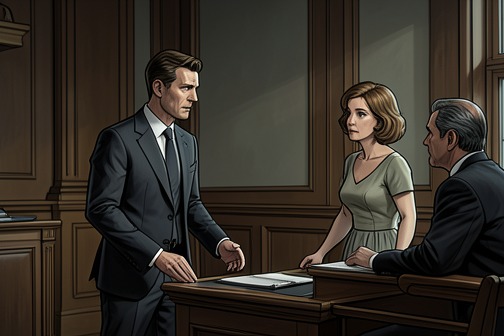
[Sherman Clancy](entity:character-recall-character-sherman-clancy-e1eb33939f61)’s acquittal for [Janet Chisum’s murder](entity:event-recall-event-janet-chisum-s-murder-d7c02f7420d3) turns on a late, contested alibi: [Victoria Robie](entity:character-recall-character-victoria-robie-cfa30d6c2ee2) testified that she had been with him on the night Chisum died. The jury accepted her account and cleared Clancy, while the trial’s entanglement with [Dan Robie](entity:character-recall-character-dan-robie-99bdd243c52e)’s marriage and [Cantrell](entity:location-recall-location-cantrell-34566b0c2c27)’s economic grievances left the verdict shadowed by local conflict. Five days later Clancy was murdered, and the case reopened in a far wider frame when investigators identified similar killings across several states.
## The Murder Case and Its Motive
Clancy was arrested after someone reported seeing him with Chisum near the [Pearl River](entity:location-recall-location-pearl-river-42196ab6760b), close to his house; police also had other information they considered relevant. The prosecution’s theory was that Clancy wanted something from Chisum that she was unwilling to give, became angry, and killed her. Investigators believed he was often drunk after three in the afternoon, and the account of the case suggested he may have been intoxicated when he killed her.
There was also a potentially incriminating firearm connection. Chisum had been shot with a .40-caliber bullet fired from a Smith & Wesson, and Clancy owned a Smith & Wesson of that kind. He said he had lost it when police came to collect it for ballistics testing. The weapon was therefore a point of suspicion, though the supplied account does not establish that it was the murder weapon.
The timeline gave the prosecution a substantial interval in which to build its case: roughly three months passed between Chisum’s death and the end of Clancy’s trial. The eventual acquittal did not end the sequence. Clancy was murdered only five days after the jury found him not guilty, a proximity that made a connection between the cases difficult for investigators to ignore. Dan Robie was subsequently jailed for Clancy’s murder, although the acquittal itself did not resolve who had killed either victim.
## Victoria Robie’s Alibi
[Victoria](entity:character-recall-character-victoria-fef24d0cf051) came forward while the trial was underway, saying she had been with Clancy from eight o’clock that night until six the following morning. Her account placed her with him throughout the period in which police believed Chisum had died, around two in the morning. Victoria said they had talked and drunk together, and that nothing else had happened. The alibi did not merely put Clancy elsewhere: it implicated the wife of the judge overseeing his trial in an intimate and politically explosive connection to the defendant.
The timing of Victoria’s disclosure mattered. She had not volunteered the alibi earlier, and she had initially denied being with Clancy when police questioned her. Clancy had apparently told his lawyers or the police about the encounter, prompting investigators to ask Victoria directly; she denied it, then changed her account and admitted she had been with him. Authorities could have pursued her for lying to police, but chose not to, reasoning that she had already suffered enough by coming forward.
Victoria’s delay was explained in part by the risks created by her marriage. Dan Robie was described as jealous, and he was also the judge in Clancy’s case. Victoria may have been afraid to reveal the relationship; she eventually did so when Clancy appeared likely to be convicted. Her stated reason was that, however vile Clancy might be, he should not go to prison for a murder he had not committed. The disclosure thus presented the jury with a credibility question and a moral claim at once: whether to believe a witness whose account arrived late, and whether the prosecution had proved this particular killing.
## Recusal, Testimony, and the Verdict
The prosecution strongly objected when Victoria’s testimony emerged. Dan had to recuse himself as soon as his wife disclosed that she had been with Clancy, because he could no longer serve as judge in a case involving her. A replacement judge admitted the testimony. Victoria appeared convincing on the stand, although the observers [Sheila Taggert](entity:character-recall-character-sheila-taggert-d78c60d04e99) describes understood that she did not want to be there and looked as if she might be sick. The jury believed her account. Since police placed Chisum’s death at approximately two in the morning, the overnight alibi supplied the basis for finding Clancy not guilty.
The result was legally decisive but socially charged. Sheila believed that some jurors may also have relished the opportunity to strike at Dan through a case involving his wife and Clancy. That suspicion sat alongside another grievance: Dan had helped local families obtain compensation from an oil company after an offshore platform incident, but the company then shut down the platform and left the area. Two hundred people lost their jobs, more than half of them from Cantrell; the jobs had paid well, and, according to Sheila, many of those workers remained on government assistance. Dan’s role in securing compensation had not protected him from resentment over the departure and lost livelihoods.
The trial therefore carried more than the question of Clancy’s guilt. Victoria’s testimony forced Dan off the bench; the jury’s assessment of the alibi determined the verdict; and local anger toward Dan may have colored how at least some jurors understood the spectacle. The evidence does not establish that resentment caused the acquittal, but it makes the verdict inseparable from the town’s economic and personal conflicts.
## The Verdict in a Wider Pattern
The acquittal became newly consequential when an [FBI](entity:organization-recall-organization-c3b9c0848e8c) investigator disclosed that he had been assigned to the Violent Criminal Apprehension Program and was investigating a possible serial killer. Clancy and Chisum’s deaths had attracted federal attention because eight other killings had occurred in four states over the preceding nine years. In those cases, the victims were killed roughly in pairs: an older man who had paid a younger woman for sex was found with his throat slit in his car, while the woman was shot in the head and thrown into a body of water.
The pattern strengthened the case for comparing the Cantrell murders with killings elsewhere, but it did not make every detail fit. The Arkansas murders had occurred four years earlier, creating a gap that investigators explicitly considered significant; the other pairs had also been separated by shorter intervals between the woman’s death and the older man’s killing than in the Cantrell case. The recurring victim relationship and methods offered a basis for linkage, while the timing differences cautioned against treating resemblance as proof on its own.
Later, when asked whether she had killed the other people the FBI was investigating, Victoria answered in a way that connected her past killings to the recurring pattern. That later revelation alters the meaning of the acquittal without changing its legal result: the jury had accepted her account as an alibi for Clancy, while the larger investigation exposed a series of paired murders and Victoria’s involvement in killings beyond Cantrell. Clancy’s release was thus both an ending in court and a hinge in the investigation—followed within five days by his own death, and ultimately reframed by evidence that the apparent local case belonged to a broader sequence.
Event 5
Dan Robie arrested in the Clancy case
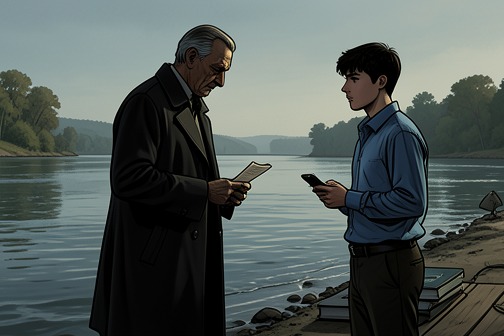
[Dan Robie arrested in the Clancy case](entity:event-recall-event-020b711603e3) is the news that breaks [Will Robie](entity:character-recall-character-will-robie-49c73e14ccc9)’s long-held distance from his family. Told by [Blue Man](entity:character-recall-character-blue-man-0fa215f02249) that his father has been arrested for murder, Will initially refuses the information; once he reads the sparse case file, however, the accusation becomes the immediate pressure behind his decision to return to [Cantrell](entity:location-recall-location-cantrell-34566b0c2c27).
## The News and Will’s Response
Blue Man introduces the subject abruptly, interrupting Will’s question with the words, “It’s your father.” Will struggles to focus on what he has heard: instead of Blue Man, he sees his father’s face superimposed over the man’s. When Blue Man finally explains that [Dan Robie](entity:character-recall-character-dan-robie-99bdd243c52e) has been arrested, Will asks what for. The answer is murder. Blue Man adds that he thought Will would want to know, but Will replies, “Well, you thought wrong.” The clipped exchange registers as both a refusal to engage and a sign of how difficult the news is for him to take in.
After Blue Man leaves, Will looks back at the water, opens the file, and reads by the light of his smartphone. [Sherman Clancy](entity:character-recall-character-sherman-clancy-e1eb33939f61) is dead; he knew Dan, and evidence points to Dan as the killer. The case details are still sketchy, but the consequences are not: Dan, a former Marine with a reputation for toughness and violence, is sitting in jail on a murder charge. Will can imagine his father killing; he cannot readily accept that killing and murder are the same thing. That distinction is unsettled by Will’s own history: his completed missions have technically involved murder, yet he does not think of himself as a murderer. Dan’s arrest therefore lands not only as a family crisis but as a challenge to the moral categories Will has used to understand his own work.
The news also exposes a physical response that surprises Will. His palms grow sweaty, and he recognizes fear where he is accustomed to acting without it. The file places the case in [Cantrell, Mississippi](entity:location-recall-location-cantrell-mississippi-114140fa53a9), a small town near the Louisiana border and only a few miles from the Gulf Coast. Will has never expected to make the decision now before him, but concludes that moving forward may require making at least a modest dent in the decades-long disorder of his past. He decides to go to Cantrell, a place whose route he already knows.
## The Journey and the Wider Case
Will’s return begins with a flight to Atlanta and a connection to Jackson, [Mississippi](entity:location-recall-location-mississippi-4cc81eb48f93). Rather than take a small plane to [Biloxi](entity:location-recall-location-biloxi-7b8b503c9fc0), he rents a car and drives nearly three hours south toward Cantrell, using the journey to acclimate himself to the place and to the decision he has made. State Route 49 carries him toward Gulfport; the route brings him close to the Gulf Coast, but he stops short of it and heads for the town where his father is being held.
The case expands beyond Dan and Sherman Clancy when [Wurtzburger](entity:character-recall-character-wurtzburger-62dc79aa4b87) explains that he is assigned to the [FBI](entity:organization-recall-organization-c3b9c0848e8c)’s Violent Criminal Apprehension Program, or ViCAP, and that the investigation is not simply about casinos. The FBI is looking for a serial killer. Clancy and [Janet Chisum](entity:character-recall-character-janet-chisum-d1bc41d9e78b) resemble victims in eight other killings across four states during the preceding nine years. Those murders followed a recurring pattern: an older man paid a younger woman for sex; the man’s throat was cut in his car, while the woman was shot in the head and discarded in a body of water. The resemblance makes the Cantrell deaths part of a possible sequence, though it does not by itself settle who committed them.
The timing both strengthens and complicates that possible connection. The earlier killings occurred roughly in pairs, with about eighteen months between them; the Arkansas murders were four years before the Cantrell cases. [Jessica Reel](entity:character-recall-character-jessica-reel-8940da6dfd06) notices that the longer interval might matter. She also asks whether, in the other cases, the woman was killed long before the older man. Wurtzburger says the gap in Cantrell was longer than in the other cases, and confirms that the earlier victims were connected through paid sex. These differences leave the investigators weighing a repeated pattern against meaningful departures from it.
The pattern also sharpens the question of Dan’s place in the crimes without resolving his guilt. Will acknowledges that his father had a motive to kill Sherman Clancy, but Wurtzburger points out that this does not explain Janet Chisum. The arrest therefore sits at the intersection of two inquiries: a local accusation with an apparent personal motive, and a multistate investigation whose paired killings share a recognizable method but not identical timing. The distinction keeps suspicion from becoming proof and turns the case into a test of whether the similarities conceal one offender or merely make separate crimes look alike.
## Retrospective Reversal
The arrest’s significance changes as the investigation reaches the shack. There, Will asks [Victoria Robie](entity:character-recall-character-victoria-robie-cfa30d6c2ee2) whether she killed the other people the FBI is investigating. She admits that she did, and explains the four-year gap before the Cantrell killings by the time it took to meet Dan Robie, marry him, become pregnant, and have [Tyler Robie](entity:character-recall-character-tyler-robie-51f90085dd8f). The pattern that had made Dan’s arrest part of a multistate inquiry thus leads back to his wife, while the evidence presented still distinguishes her confession to those other killings from Dan’s apparent motive in Sherman Clancy’s death.
[Victoria](entity:character-recall-character-victoria-fef24d0cf051) also reveals how deliberately she had used the investigation’s progress. She knew Will suspected his father and knew he had discovered the shack, information she had gathered while keeping discreetly informed about the inquiry. If Will had not appeared, she planned to return battered and disheveled, with Tyler Robie, and claim they had been kidnapped and assaulted; because Tyler could not speak, she expected him to be unable to challenge her account. She says she would then have killed Will. The confession turns the arrest’s original family crisis into a path toward exposing a calculated deception, but Will rejects her justification: the killings remain murder, however she explains them.
## Narrative Significance
The arrest functions as a hinge between Will Robie’s private estrangement and an investigation whose scale keeps changing. Its first meaning is intimate: the accusation forces him to confront the difference he draws between killing and murder, and the past he had hoped to leave untouched. As the case widens, that family question becomes entangled with a pattern of killings, discrepancies in their timing, and a confession that redirects suspicion. The arrest therefore begins the inquiry without answering its central moral and factual questions: evidence has pointed toward Dan, but the emerging account makes clear that a charge, a motive, and a recurring pattern are not by themselves the same as proof.
Event 6
Dan Robie's murder arraignment
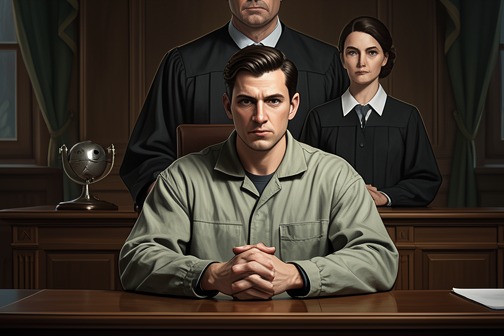
[Dan Robie's murder arraignment](entity:event-recall-event-df94573724e6) places a former [Mississippi](entity:location-recall-location-mississippi-4cc81eb48f93) judge in the criminal process he once served: charged with [Sherman Clancy](entity:character-recall-character-sherman-clancy-e1eb33939f61)'s willful killing, he appears in shackles, rejects appointed counsel, and pleads not guilty. The hearing leaves both his representation and his detention unresolved, while the prosecution argues that threats make jail the safer place for him pending trial.
## The Arraignment Hearing
[Dan Robie](entity:character-recall-character-dan-robie-99bdd243c52e) enters the courtroom in an orange prison jumpsuit, his white hair neatly combed and his posture still upright despite the shackles at his waist, hands, and feet. [Sheila Taggert](entity:character-recall-character-sheila-taggert-d78c60d04e99) and another uniformed officer escort him to the counsel table, remove the restraints, and leave him sitting alone. His hands, tanned and veined, rest balled into fists on the worn wood. The controlled formality of his appearance contrasts with the restraints that mark his changed status: he is now before a court as a defendant, not as a judge.
Taggert calls the case as the [State of Mississippi](entity:location-recall-location-efe459003acd) versus [Daniel Robie](entity:character-recall-character-daniel-robie-5ba7ae27b0f6), identifying the charge as first-degree murder for the willful killing of Sherman Clancy. When Judge Benson asks whether the defendant has counsel, [Aubrey Davis](entity:character-recall-character-aubrey-davis-4fb9321bacfa) explains that, despite the state's strenuous objections, Dan has waived his right to representation and intends to act as his own lawyer. Benson strongly recommends independent counsel and reminds him that one can be appointed if he cannot afford one. Dan says he understands but stands by his decision; the judge postpones a final decision on the waiver for a later date. Asked for his plea, he immediately answers not guilty.
The dispute then shifts to bail. Davis initially asks that none be set and that Dan be remanded to the [Cantrell Jail](entity:location-recall-location-cantrell-jail-c2c69de99334) until trial. When Benson questions the request, Davis clarifies that the state does not consider Dan necessarily a flight risk; it has instead received threats against his life and argues that remaining in custody would be safer. He presents papers documenting the threats to the judge. Benson takes the arguments under consideration and orders Dan held in the custody of the State of Mississippi until she rules. As Dan is led away, he looks across the courtroom and pauses for an instant when his gaze reaches his son, then turns back toward the exit.
## The Hearing's Wider Stakes
The courtroom also holds people whose reactions hint at the case’s reach beyond the charge. [Sara Chisum](entity:character-recall-character-sara-chisum-3d5dacb7eece), whom [Will Robie](entity:character-recall-character-will-robie-49c73e14ccc9) has seen staring at him with a worried, pleading expression, appears afraid that what she told him may become public. Her father looks from her to Robie, says something to his daughter, and leaves her pale and looking down; afterward, he turns on Robie with conspicuous hostility. When Dan is being removed, [Victoria](entity:character-recall-character-victoria-fef24d0cf051) appears at the main door dressed entirely in black. These brief moments do not settle what any of them know, but they place the arraignment amid a web of family loyalties and concealed information.
The murder charge also sits within a pattern not disclosed in the courtroom. Later, an investigator assigned to ViCAP tells Robie and [Jessica Reel](entity:character-recall-character-jessica-reel-8940da6dfd06) that the killings of Sherman Clancy and [Janet Chisum](entity:character-recall-character-janet-chisum-d1bc41d9e78b) resemble eight other killings across four states over nine years. The recurring victim pairing is an older man and a younger woman: the man pays for sex and is found with his throat slit in his car, while the woman is shot in the head and thrown into a body of water. That pattern broadens the investigation beyond the case against Dan, even as the arraignment itself concerns only Sherman Clancy’s death.
The chronology makes the apparent pattern less straightforward. The Arkansas murders occurred four years earlier; Reel calculates that the other killings had been spaced roughly eighteen months apart and wonders whether the longer interval matters. She also asks whether the earlier cases showed as long a gap between the woman’s murder and the older man’s as the [Cantrell](entity:location-recall-location-cantrell-34566b0c2c27) case does. They did not. Dan acknowledges that his father had a motive to kill Sherman Clancy, but distinguishes that accusation from [Janet Chisum’s murder](entity:event-recall-event-janet-chisum-s-murder-d7c02f7420d3), for which, he observes, his father had no such motive. The prosecution’s immediate case and the broader series therefore overlap without neatly explaining one another.
The investigation’s later disclosures further alter the meaning of the arraignment. When asked whether she killed the other people in the [Federal Bureau of Investigation](entity:organization-recall-organization-federal-bureau-o-f1c5664278d2)’s cases, Victoria claims responsibility and explains that the interval before the Cantrell killings included meeting Dan, marrying him, becoming pregnant, and having Tyler. Her account supplies a personal explanation for the long gap in the series, while making the courtroom’s initial focus on Dan look incomplete. The arraignment establishes his formal position in the criminal process, not the final truth about who committed the linked killings.
## A Charge, Not a Verdict
The arraignment fixes the legal question narrowly: Dan Robie is accused of killing Sherman Clancy, and his not-guilty plea contests that charge without resolving it. The broader inquiry points beyond the courtroom’s immediate case, but resemblance between crimes is not itself a finding of responsibility. The later revelation that Victoria killed the other victims changes how the linked cases are understood; it does not turn the arraignment into a judgment on those murders. The scene’s force lies in that separation: a formal accusation has consequences before the underlying story is complete, and the court’s decisions about Dan’s counsel and custody remain provisional rather than a verdict on guilt.
## The Former Judge Before the Court
Aubrey Davis invokes Dan Robie’s past when he steps forward with his hands in his pockets: Dan has long been a member of the Mississippi bar and, for many years, occupied the very seat now held by Judge Benson. The reference briefly exposes the reversal at the center of the hearing. Dan is not unfamiliar with the law or the authority of the courtroom; he once exercised that authority, and now its procedures govern him as an accused man. Benson, annoyed by Davis’s detour into history, cuts it short and returns to the arraignment’s immediate business. The court acknowledges Dan’s former standing without allowing it to displace the present charge.
Event 7
Offshore oil-rig explosion and resulting lawsuit
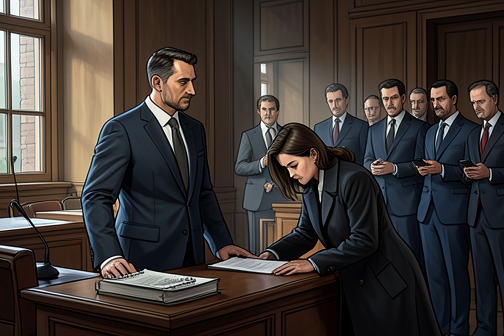
The offshore oil-rig explosion and resulting lawsuit reshaped [Dan Robie](entity:character-recall-character-dan-robie-99bdd243c52e)’s fortunes and [Cantrell](entity:location-recall-location-cantrell-34566b0c2c27)’s economic life. After people from four families died in the Gulf disaster, he took on the oil company over safety violations and falsified records. The case won the families substantial compensation, but the company’s departure left hundreds without well-paid work, complicating the meaning of the victory and helping explain why Dan remained unpopular in parts of his community.
## The Explosion and the Case
The explosion occurred at a drilling platform in the Gulf and claimed people from four families. Dan Robie represented those families in the ensuing legal fight. The case, as later recounted to [Will Robie](entity:character-recall-character-will-robie-49c73e14ccc9), centered on a pattern of alleged corporate misconduct: safety violations, cost-cutting, falsified paperwork, and workers made to put in excessive hours that went undocumented.
The company answered the families’ claims with powerful lawyers, seeking to overwhelm Dan with legal resources. When that failed to stop him, it resorted to physical intimidation. His office was burned out, his car was shot up, and attackers later caught him alone and broke his arm. Dan fought back, laying out two of them. The violence did not end the case; it hardened his resolve to keep pressing it.
## Compensation and Retaliation
The lawsuit took years. In the end, the families received tens of millions of dollars each, and Dan received his share of the settlement. The recovery marked a considerable financial victory for the people he represented, after a case in which the company’s resources and intimidation had made the outcome far from assured.
That success did not keep the company in the region. It shut down its platform and left the area. Two hundred men lost their jobs, more than half of them from Cantrell. The positions had paid well, and there was little to replace them; years later, more than half of the affected local workers were still relying on government assistance. The account thus places compensation for the explosion beside a separate, enduring cost: the disappearance of livelihoods tied to the platform.
## Dan Robie’s Local Standing
The lawsuit helped establish Dan as a fighter who would not be intimidated, but its aftermath made his standing in Cantrell more complicated. Some residents associated the company’s departure with the loss of their jobs, even though Dan had represented families bereaved by the explosion and won them substantial compensation. His success in court therefore did not translate into universal gratitude. The case became part of the town’s economic grievance and a reminder that legal redress for one harm can coexist with community-wide consequences that are themselves deeply felt.
Event 8
Will Leaves Cantrell Alone After Laura Fails to Meet Him
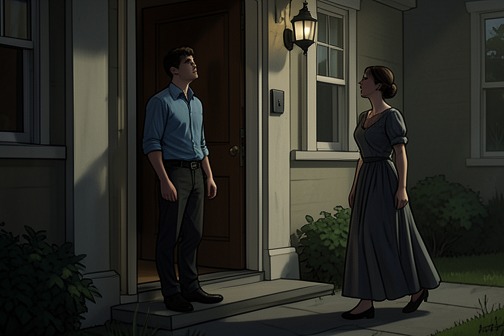
[Will Robie](entity:character-recall-character-will-robie-49c73e14ccc9)’s departure from [Cantrell](entity:location-recall-location-cantrell-34566b0c2c27) began as a planned escape with [Laura Barksdale](entity:character-recall-character-laura-barksdale-ad28e86cce79) and became a solitary flight after she failed to meet him. Recalled years later from the grounds of the house where he had waited for her, the episode marks the break between the future the two teenagers imagined and the long separation that followed.
## The Promise of Leaving
In the memory, Robie is eighteen and already intends to leave Cantrell. When he tells Laura of his plan, she immediately asks to go with him. They swear undying love, and for a time their shared departure seems certain. The promise is made with the absolute confidence of young love; its importance lies not only in what the pair say they will do, but in the future they believe they have chosen together.
Robie prepares to make that future real. He packs his few belongings into a rusty Chevrolet and goes to the place they had arranged to meet the following night. The practical details—a small collection of possessions and an old car—make the plan an actual departure rather than a fantasy. He arrives expecting Laura to join him, and waits there for three hours.
## The Missed Meeting and Departure
Laura never comes. Afraid something may have happened to her, Robie drives his Chevrolet to her house, parks out of sight, and approaches on foot. The house’s façade is brightly lit. He looks up to the second floor and finds her bedroom at the third window from the left; her silhouette is visible against the light. From that glimpse, he concludes that she is not coming. The revelation reverses the certainty of their promise: the love they had called undying, he decides, has lasted less than a day.
Robie returns to his car and drives away. The recollection describes his decision as shaped by the shortsighted stubbornness of being eighteen, but gives no indication that he pauses to confront Laura or ask her why she stayed. He keeps driving through the night, stopping only the next morning to eat and sleep in the car before setting off again. He continues until the Atlantic Ocean comes into view. The movement is literal and emotional at once: instead of leaving Cantrell with Laura, he carries his disappointment away alone, putting distance between himself and the house where he saw her silhouette.
## The Long Aftermath
The departure does not immediately erase Robie’s hope of returning for Laura. Over the next couple of years he writes to her, asking her to join him, and tries calling the house. No one answers; his messages bring no reply, and Laura never calls him back. Even without any response, he tells himself that he will return and that they will be together. The failed meeting thus extends beyond one night: silence keeps the imagined reunion alive even as it prevents any real exchange between them.
That expectation gradually weakens. Life intervenes, Robie’s love fades, and the years pass without his returning to [Mississippi](entity:location-recall-location-mississippi-4cc81eb48f93). The memory ends its account of the separation with the contrast between that long absence and his present return: he has come back now. The failed meeting is therefore not presented as a reunion or a resolution of what happened between them. It is the origin of an unfinished attachment whose promise endured in Robie’s plans longer than it did in his life.
## Recalled at the House
The episode is told as a memory prompted by Robie’s return to the house. In the present, he walks back to his car and sees [Priscilla](entity:character-recall-character-priscilla-4c0f8c1856b2) watching from an upstairs window. He looks past the house toward the rear grounds, where he had once held Laura in his arms; that sight leads into the remembered promise, the missed meeting, and his departure. The transition makes the landscape a link between two times: the grounds hold the intimacy of the teenagers’ vow, while the lit bedroom window supplies the decisive image of Laura remaining behind.
The recollection also gives the separation its unequal shape. Robie remembers waiting, leaving, writing, calling, and imagining a future reunion; Laura’s actions in the account are limited to asking to go with him, failing to meet him, and appearing as a silhouette in her bedroom. The narrative establishes what Robie saw and what he concluded, but does not explain why Laura did not come. That gap remains part of the event’s force: his departure follows not an answered rejection but an absence he reads as final, and the years that follow turn that reading into a lasting separation.
Event 9
Will Robie's return to Cantrell

[Will Robie's return to Cantrell](entity:event-recall-event-will-robie-s-return-to-49382b3e081c) makes his long absence part of the event itself: local contacts emphasize that he has not been back for more than two decades, then ask whether he believes his father killed [Sherman Clancy](entity:character-recall-character-sherman-clancy-e1eb33939f61). His return reconnects him to a family crisis while leaving him in the position of an outsider whose presence requires explanation.
## An Outsider's Return
While leaning against the fender of his rental car, Robie is told that the people contacting him have checked his background and know he has been away from [Cantrell](entity:location-recall-location-cantrell-34566b0c2c27) for over two decades. They identify that absence as one reason for approaching him in this way. The conversation turns directly to his father and the question of whether Robie believes he killed Clancy, placing the family accusation at the center of his re-entry into town.
## Seeking Legal Counsel
Robie later meets [Toni Moses](entity:character-recall-character-toni-moses-ed7a614280df) in her crowded office, where a huge desk and even the chair she offers are piled with paper files. Moses asks whether he has come to retain her on his father's behalf. Robie says his father does not know he is there, though the two have talked. He explains that [Sheila Taggert](entity:character-recall-character-sheila-taggert-d78c60d04e99) speaks highly of Moses; Moses, in turn, says she had been wondering when he would ask Sheila about hiring a lawyer.
Moses sets out clear terms rather than promising an outcome: she charges an hourly fee, says she works hard and leaves no stone unturned, and takes no extra payment if she wins. The exchange establishes that Robie's return has moved beyond the initial question about his father's guilt toward the practical possibility of legal representation, though the available account does not establish that he hires her.
## Significance
The return is framed through two forms of scrutiny. Others treat Robie as a newcomer because of his long absence, while the question about his father makes that absence inseparable from the unresolved local case. His conversation with Moses shifts the focus from whether he believes the accusation to what can be done for his father, but stops short of resolving either the case or the legal arrangement.
Event 10
The Janet Chisum Murder Case and Its Cross-State Links

[The Janet Chisum Murder Case and Its Cross-State Links](entity:event-recall-event-janet-chisum-50eddcff3558) begins as a local crime entangled with a contentious murder trial, then widens into an investigation of repeated killings across state lines. [Janet Chisum](entity:character-recall-character-janet-chisum-d1bc41d9e78b) was killed and her body recovered from a river; although [Sherman Clancy](entity:character-recall-character-sherman-clancy-e1eb33939f61) was tried for her murder, he was acquitted. The later recognition of a pattern—and [Victoria Robie](entity:character-recall-character-victoria-robie-cfa30d6c2ee2)’s eventual admission—changes the meaning of both the case and the apparent connection between Janet and Clancy.
## The [Cantrell](entity:location-recall-location-cantrell-34566b0c2c27) Case and the Clancy Trial
Janet’s death enters the investigation through a direct question: if Sherman Clancy did not kill her, who did? [Will Robie](entity:character-recall-character-will-robie-49c73e14ccc9) asks it while discussing the case with [Billy Faulconer](entity:character-recall-character-billy-faulconer-b68eb1fd3e0a), who recalls that the trial revealed Clancy had paid Janet for sex. The relationship was presented publicly as an explanation for why Clancy had been suspected, but it did not establish that he had killed her. Billy’s account leaves the central question open and connects Janet’s case to the separate killing of Clancy.
[Wurtzburger](entity:character-recall-character-wurtzburger-62dc79aa4b87) later supplies the known circumstances: Janet was killed by a gunshot, and her body was thrown into a river and recovered downstream the following day. Clancy was tried because of his relationship with her, but the prosecution did not secure a conviction. Will points out that his stepmother, Victoria Robie, provided Clancy with an ironclad alibi. That testimony helped free Clancy, and the investigation identifies it as a possible motive for Will’s father, [Dan Robie](entity:character-recall-character-dan-robie-99bdd243c52e), to kill him. It does not, by itself, explain Janet’s murder or show that Dan was responsible for it.
The timing intensifies the suspicion around Clancy’s later death without resolving Janet’s case. Clancy was acquitted and released from jail; five days later, he was dead. Will’s family history therefore intersects with the criminal investigation, but the two deaths remain distinct questions: who killed Janet, and who killed Clancy? The contrast between a persuasive personal connection and the absence of proof becomes central once investigators consider a broader pattern.
## The Cross-State Pattern
The case takes on a different scale when an [FBI](entity:organization-recall-organization-c3b9c0848e8c) investigator reveals that the stated casino investigation was not the whole reason for being in Cantrell. Wurtzburger says the assignment is connected to the Violent Criminal Apprehension Program and describes the possibility that investigators are hunting a serial killer. The connection he names is Sherman Clancy and Janet Chisum: their deaths may belong to a sequence rather than simply to a local dispute.
The FBI has identified eight other killings across four states during the preceding nine years. The cases resemble one another in pairs: an older man and a younger woman had a paid sexual relationship; the older man was later killed in his car, and the woman was killed by a gunshot and left in a body of water. Wurtzburger identifies New York, Pennsylvania, Tennessee, and Arkansas as locations of earlier killings. Cantrell may represent a fifth pair. The repeated association between the victims, their deaths, and the disposal of the women’s bodies gives investigators a basis for comparing cases that would otherwise appear geographically separate.
The pattern is suggestive, but the investigators also identify differences that complicate a simple match. Reel calculates that the earlier killings were separated by roughly eighteen months, while the Arkansas murders occurred four years before the current investigation. Wurtzburger agrees that the longer interval may matter. He also says the interval between the woman’s death and the older man’s killing was not as long in the other cases as it was in Cantrell. Janet’s case therefore fits the recurring circumstances while differing in timing; the resemblance supports investigation, not an assumption that every detail is identical.
## From Suspicion to Admission
The cross-state theory initially changes the questions rather than answering them. Will acknowledges that Dan had a motive to kill Clancy, but Wurtzburger distinguishes that possibility from Janet’s murder: the evidence about Dan and Clancy does not account for the woman’s death. Reel’s questions about the other pairs draw attention to the victims’ paid relationships and to the gaps between their killings. The case expands from a dispute over an acquitted suspect into an effort to determine whether one offender links the separate deaths.
That uncertainty is retrospectively altered when Will asks [Victoria](entity:character-recall-character-victoria-fef24d0cf051) whether she killed the other people the FBI is investigating. She answers affirmatively and describes a pattern of targeting older men and younger women. She also explains the four-year interval after the Arkansas killings by referring to meeting Dan, marrying him, becoming pregnant, and having Ty. Her response ties the pause in the series to events in her own life and places her admission within the chronology investigators had been examining.
Victoria’s admission identifies her as responsible for the killings under discussion, recasting Janet’s murder and the associated deaths as part of a repeated series rather than an isolated Cantrell crime. It also overturns the apparent significance of Victoria’s earlier role in Clancy’s trial: the alibi she supplied had helped secure Clancy’s acquittal, while the later investigation reveals that she herself was the killer the cross-state inquiry was seeking. The distinction between a motive to kill Clancy and responsibility for Janet’s death thus resolves in an unexpected direction, without making Dan’s suspicion or the original trial evidence equivalent to proof.
Event 11
Dan Robie's arraignment and bail hearing
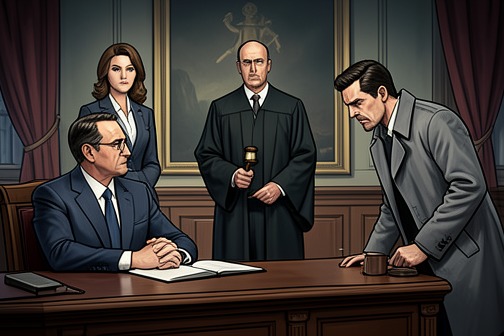
[Dan Robie's arraignment and bail hearing](entity:event-recall-event-dan-robie-eb834c2226d1) establishes the immediate legal stakes of the murder case: Dan pleads not guilty and asks to be released, but credible threats cited in court leave him in jail while the judge considers the request. The hearing also reaches beyond the courthouse when [Will Robie](entity:character-recall-character-will-robie-49c73e14ccc9) reports its result to [Victoria](entity:character-recall-character-victoria-fef24d0cf051) without telling her about the threats against his father.
## Arraignment and plea
At the courthouse, Dan acted as his own lawyer and pleaded not guilty. The judge wanted him to obtain counsel, but Dan also made a request for reasonable bail, placing his release before the court alongside the question of his representation.
## The bail request and the threats
The judge might have granted bail, Will Robie later explained, but [Aubrey Davis](entity:character-recall-character-aubrey-davis-4fb9321bacfa) told the court that credible threats had been made against Dan and that he would be safer in jail. The warning changed the immediate prospect of release: rather than leave the courthouse, Dan remained in custody while the judge took the matter under advisement.
## The hearing's aftermath
Afterward, Will Robie told Victoria that Dan had pleaded not guilty and that the judge wanted him to get a lawyer. When he gave her the fuller account, he explained that Dan had represented himself and requested reasonable bail, then described Davis's warning and the judge's decision to defer a ruling. Will did not mention the threats against his father, leaving that part of the hearing outside what he disclosed to Victoria.
Event 12
Will and Dan Robie's reunion after more than twenty years
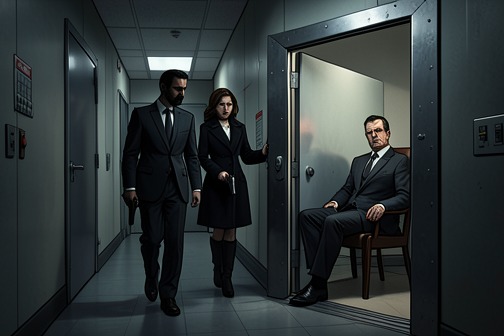
[Will and Dan Robie's reunion after more than twenty years](entity:event-recall-event-will-dan-robie-39d47c431b74) begins behind locked doors and with violence, not reconciliation. In the [Cantrell](entity:location-recall-location-cantrell-34566b0c2c27) jail, Will comes to see his father, who has been in trouble repeatedly during the long estrangement. Dan greets him with a physical attack; Will restrains him without causing lasting injury. Their first exchange makes the past impossible to sidestep, while Will’s offer to protect Dan’s family gives the meeting an immediate purpose beyond settling old accounts.
## The Visit to the Cell
Before Will reaches Dan, the woman accompanying him takes keys from her gun belt and warns him that, if the visit goes badly, she will say he overpowered her and expects him to accept that account. She unlocks a steel door, leads him along a narrow passage, then uses a different key on another door. In the cell block, she brings him to the last cell on the left and allows ten minutes. The doors are solid, concealing their occupants from view; after Will enters, she shuts and locks the cell behind him.
The controlled passage into the cell sets the reunion within a place of confinement and limited time. Will has to accept the escort’s terms to reach Dan, and once inside, he is shut in with the father he has not seen for years. The warning also establishes that the meeting could create trouble for the woman who arranged it, though she is prepared to claim that Will forced his way in if necessary. The encounter is therefore framed from the outset as both a private family confrontation and a risk managed under the jail’s rules.
## An Abrupt Physical Confrontation
Dan immediately slams Will against the wall. Will’s cheek strikes the brick and begins to swell. Dan demands to know what he is doing there, and Will breaks his grip, circles behind him, bends his arm back, and wrenches it upward. He stops short of doing permanent damage, then releases him and steps away. Dan rubs his arm as they face each other again.
The physical exchange briefly reverses their positions: Dan initiates the attack, but Will has the skill to control him and chooses restraint rather than injury. That restraint does not make the reunion gentle. Dan’s anger remains plain in the question he asks again, and Will’s swollen cheek is the immediate cost of entering the cell. The scene makes their estrangement bodily before either man explains it: their first contact is a shove into brick, followed by a hold that Will deliberately limits.
## Twenty-Two Years of Grievance
Will says that he came because he heard Dan was in trouble. Dan answers that he has been in trouble for the past twenty-two years and asks why Will did not appear then. The accusation turns the visit into a reckoning over absence rather than a simple response to the current case. Will counters with a specific memory: when he left, he gave Dan a phone number where he could be reached once he had arrived at his destination. Dan never called.
Dan describes Will’s departure as a cowardly escape in the middle of the night and accuses him of never facing anything directly. Will answers by recalling that Dan himself left home at seventeen, lied about his age, and joined the [United States Marine Corps](entity:organization-recall-organization-united-states-ma-0009a2eac3c2); he asks whether Dan ever returned home. Neither man accepts the other’s account as sufficient. Dan treats Will’s departure as abandonment, while Will points to the unanswered number and to a family history in which leaving home is not unique to the son. The exchange does not resolve who bears the greater blame. Instead, it reveals how each has preserved a different version of the same rupture.
## Help Offered, Protection Promised
When Dan challenges Will’s return, Will says he has been doing things with his life. He also rejects the idea that he has come as a moral exemplar: Dan sarcastically casts him as a Good Samaritan, and Will says that people who know him would not describe him that way. Yet he is there because Dan is in trouble, and he says he helps people in trouble even when they do not deserve it. The admission is practical rather than sentimental; Will offers assistance without claiming that the relationship has been repaired.
He goes further, promising to protect Dan’s family from harm. When Dan asks what he means, Will cites credible threats he has encountered in Cantrell and the possibility that a dangerous source is behind them. He doubts that such a source would care whom it killed, and challenges Dan to rely instead on the Cantrell police force. That warning changes the stakes of the reunion: the estranged son is not merely explaining his return but offering protection where he believes local policing may not be enough. Dan’s initial anger gives way, briefly, to wary attention. The scene ends not with forgiveness or trust, but with Will’s offer placed against the danger he describes—a concrete reason for father and son to remain in conversation.
Event 13
Attack at Pete Clancy's home and Will's intervention
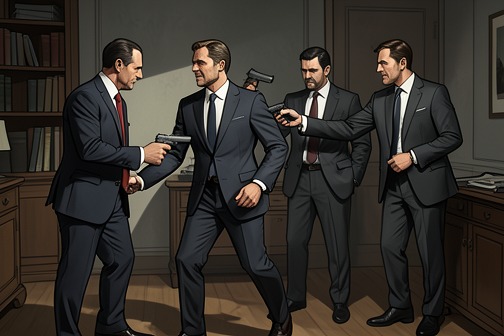
[Will Robie](entity:character-recall-character-will-robie-49c73e14ccc9)’s intervention at [Pete Clancy](entity:character-recall-character-pete-clancy-6db1d8ff6f02)’s home turns a threatened killing into a violent rescue, while revealing that someone believes Pete may possess information his father left behind. Pete escapes, but the attackers’ purpose—and the danger to Robie—remain unresolved.
## The Attack and Intervention
Pete is not alone when the men arrive: three large, tough-looking strangers accompany him, two holding him as he struggles. They force him to sit at a desk while their leader grips the back of his neck and demands that he show them what he has, or what his father had. The promise that they will leave if he cooperates is plainly unconvincing. Pete understands that he may be killed regardless, and the leader intensifies the threat by describing a slow death in a copper soaking tub with sulfuric acid. When Pete insists he knows nothing, the man draws a gun. Robie steps into the room with his own weapon aimed at the leader, ordering all three men to put their guns down and step back. They refuse; the leader calls for Robie to be shot, and the others fire toward the doorway, but Robie is no longer there.
Robie disables the two armed men at close quarters. He breaks one attacker’s forearm, then snaps the other’s wrist and turns the exposed bone against the man’s abdomen. Pete runs into the darkness. Moments later, his Porsche comes around the house and accelerates away; Robie aims after it but does not shoot, unwilling to risk hitting Pete if he loses control. He checks that his second Glock is secure and leaves by car, aware that he has made enemies without knowing who they are.
## The Threat Behind the Attack
After leaving Pete’s house, Will Robie considers whether the attackers were the casino enforcers he had heard called junkyard dogs. They seemed to believe Pete knew something his father had known, and Robie suspects that communications Pete sent may have provoked the men into arranging the meeting. That remains an inference, not an answer: Robie has saved Pete from the immediate threat but does not know who sent the attackers or what information they were seeking. The men he disabled will not simply leave, and he expects others may be sent to finish the job. His rescue has therefore changed the danger around the house rather than ended it. He had promised to protect [Victoria](entity:character-recall-character-victoria-fef24d0cf051) and Tyler; now he worries that his intervention may draw trouble toward them.
The unanswered question acquires a wider frame when an [FBI](entity:organization-recall-organization-c3b9c0848e8c) investigator discloses that the inquiry is not simply about casinos. The investigator is assigned to the Violent Criminal Apprehension Program and is pursuing a possible serial killer whose cases include [Sherman Clancy](entity:character-recall-character-sherman-clancy-e1eb33939f61) and [Janet Chisum](entity:character-recall-character-janet-chisum-d1bc41d9e78b). Eight other killings in four states over nine years share a pattern: an older man who paid a younger woman for sex is found with his throat cut in his car, while the woman is shot in the head and left in a body of water. The pattern makes the threat at Pete’s home part of a larger, still-unresolved set of crimes, without proving that the attackers themselves committed those murders.
The chronology complicates the apparent link. In the other cases, the two victims were connected through paid sex, but the gap between their deaths was shorter than in the [Cantrell](entity:location-recall-location-cantrell-34566b0c2c27) case. The Arkansas killings occurred four years earlier; the investigator calculates that the other cases were spaced roughly eighteen months apart, making the longer interval potentially significant. Later, Victoria acknowledges killing the other people under FBI investigation and explains that the years between Arkansas and Cantrell included meeting Robie’s father, marrying him, and having Tyler. That later disclosure identifies the killer behind the cross-state pattern, but it does not establish that the men who threatened Pete knew the full extent of her crimes.
Robie leaves with the attackers’ purpose unresolved and a flash drive in his pocket, hoping it contains answers. The small object gives his rescue a continuing investigative consequence: Pete’s father may have left information worth killing for, while Robie’s decision to intervene has made him a possible target before he can determine what the drive holds.
## Retrospective Reframing
A later revelation gives the danger surrounding the Robie family a more intimate and deliberate dimension. At the shack, Victoria explains that she had kept herself informed about the investigation through Will Robie and his partner, asked discreet questions, and knew they suspected her father and had discovered the place. She had prepared a fallback: if they did not appear, she would return battered and disheveled with [Tyler Robie](entity:character-recall-character-tyler-robie-51f90085dd8f), presenting a kidnapping and assault story that he could not contradict because he could not speak. She also says she would have killed Will another time. The account reveals how she could turn Tyler’s silence into cover and make an apparent plea for protection serve her own plan.
That disclosure changes the meaning of Will’s earlier promise to protect Victoria and Tyler: the danger he feared bringing to their home was bound up with the danger already concealed within it. It does not establish that Victoria sent the men who attacked Pete Clancy, or explain who they were. Instead, the later revelation sharpens the distinction between what Will could see that night—a threat to Pete and an unknown set of enemies—and the hidden family danger he had not yet recognized.
## What the Rescue Leaves Unresolved
The episode establishes two lines of danger without proving they meet: the men who targeted Pete Clancy appear to want information connected to his father, while the [Federal Bureau of Investigation](entity:organization-recall-organization-federal-bureau-o-f1c5664278d2) is tracing a separate-looking pattern of paired murders. Victoria’s later admission resolves who committed the killings under investigation, but not who sent the men to Pete’s house or what they believed he could reveal. That gap preserves the scene’s central reversal: Will Robie can stop an immediate killing, yet his intervention does not give him command of the larger threat.
Event 14
Clancy estate fire
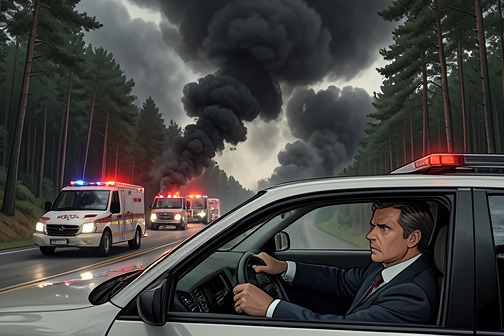
The [Clancy estate fire](entity:event-recall-event-clancy-16fd0ff469a4) is a sudden act of destruction whose significance remains uncertain: it reduces a major property to what is left, while raising the possibility that the blaze was intended to conceal evidence connected to an earlier attack. [Will Robie](entity:character-recall-character-will-robie-49c73e14ccc9) witnesses the emergency response but learns neither whether anyone was hurt nor who set the fire. His later theory links it to the men who tried to kill him and [Pete Clancy](entity:character-recall-character-pete-clancy-6db1d8ff6f02), without resolving that suspicion into fact.
## The Sirens and the Turn Toward the Estate
After leaving in his car, Robie hears sirens. Near the main road into town, a fire truck flashes past, followed by another, a police car, and an ambulance. Robie had been about to turn right toward town; instead, he turns left and follows the emergency vehicles. The change of direction makes the fire an immediate interruption to his journey, though he does not yet know where the convoy is headed.
Twenty minutes later, he sees thick black smoke rising from behind a forest of trees. Ten minutes after that, the emergency vehicles pass through the gates of the Clancy estate. Robie stops across the road, but the smoke is so dense that he cannot see much beyond the entrance. The scene supplies a stark view of the fire’s scale while withholding its source and its effects inside the property.
## An Estate Reduced to What Remains
Firefighters begin combating the blaze, and Robie hears the rush of water. A police car blocks the entrance to the house, moving only when another fire truck arrives. Robie gets out and leans against the front fender of his car, remaining outside as the response continues. The account establishes a substantial emergency presence—fire trucks, police, and an ambulance—but does not report what the firefighters find or whether the ambulance is needed for an injured person.
In a later exchange, the fire is identified as having consumed the Clancy estate: only what is left of it remains. When asked whether anyone was hurt, the person responding says they do not know and will not disclose information privately; Robie is told he will hear through the town’s gossip, like everyone else. The uncertainty is part of the event’s aftermath. The property’s destruction is plain, but casualties and the precise extent of the damage are not confirmed in the available account.
## Suspicion About the Fire’s Purpose
Robie later hears that the house has burned and asks whether the people involved could be the same ones who tried to kill him and Pete Clancy. He denies killing any of the attackers and reasons that they would eventually have had to leave. In his view, setting the house on fire could have allowed them to cover their tracks or destroy incriminating material. He presents this as a possible explanation, not as established knowledge: the narrative does not confirm who started the blaze or whether evidence was actually destroyed.
That distinction gives the fire its investigative weight. It occurs amid reported crimes and an attack on Robie and Pete, so the ruined estate may represent more than property loss; it may also be a site from which evidence has been removed or obliterated. Yet Robie’s proposed connection remains unverified, and the unanswered questions—who set the fire, whether anyone was harmed, and what may have been lost—leave the event as both a visible catastrophe and an uncertain clue.
Event 15
Discovery of Sherman Clancy's blackmail files
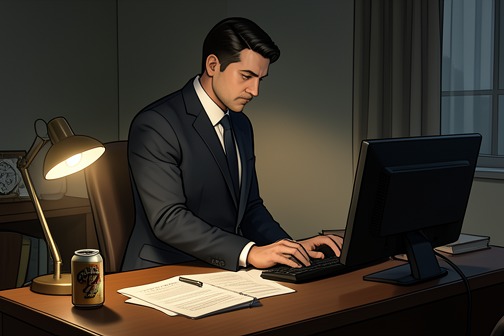
The discovery of [Sherman Clancy](entity:character-recall-character-sherman-clancy-e1eb33939f61)'s blackmail files transforms an apparently straightforward search for evidence against [Pete Clancy](entity:character-recall-character-pete-clancy-6db1d8ff6f02) into an investigation of the money, photographs, and concealed relationships behind his father's business dealings. The files offer Pete a possible motive to kill Sherman, but they also point beyond the Clancy family: the supposed mineral-rights windfall may have disguised a payoff, and the material becomes part of a wider inquiry into linked murders and blackmail.
## Causes and Background
The search takes place upstairs, where five rooms include a club room and an office. In the office, [Will Robie](entity:character-recall-character-will-robie-49c73e14ccc9) finds paper files beside a computer. He examines the room carefully, bringing a desk lamp closer to the papers; its power cord is frayed, and a half-full can of Budweiser sits on the desk. These ordinary, specific details frame the discovery as the result of patient searching rather than a document simply handed over to investigators.
The computer is password-protected. Robie eventually gains access by entering Redneck and sees emails moving through Pete Clancy's account. Since Sherman Clancy's death, Pete has been contacting people at the [Rebel Yell Grand Palace](entity:location-recall-location-rebel-yell-grand-pal-3c0bef3c38de) casino in [Biloxi](entity:location-recall-location-biloxi-7b8b503c9fc0). The correspondence suggests he was positioning himself to take his father's place as a business partner. That ambition supplies an immediate possible motive: Pete could have wanted Sherman dead so he could inherit or assume the business relationship.
## Discovery and Preservation
Robie photographs the paper files and copies the emails to a flash drive he brought with him. He also saves other messages that look potentially significant but cannot be read during the search. The distinction matters: the investigation preserves both physical records and digital correspondence, while leaving some of the electronic material for later examination. The computer offers a view into Pete's dealings, but the files and images prove to have a wider significance than the casino negotiations alone.
Robie takes the material to [Toni Moses](entity:character-recall-character-toni-moses-ed7a614280df), meeting her in her office with [Jessica Reel](entity:character-recall-character-jessica-reel-8940da6dfd06). The handoff moves the discovery from a private search into the work of building [Dan Robie](entity:character-recall-character-dan-robie-99bdd243c52e)'s defense. Later, Robie and Reel study a laptop and find themselves confronting material they had not expected. They consider whether the people who attacked Pete were seeking the blackmail evidence; Robie has the files, but he and Reel cannot be sure the attackers know that. The possibility that someone is searching for the same material makes possession of the evidence a danger as well as an investigative advantage.
## The Money Behind the Records
The files and photographs lead Robie and Reel to question the account that Sherman Clancy made his money by selling mineral rights. Robie recalls that people said Clancy had struck oil or gas on his farmland, yet no one could identify what resource lay there or name the energy company involved. When Robie and Reel inspect the property, they find no sign of extraction. The single access road is too narrow and weak for the equipment that oil or gas operations would require, and the surrounding forest offers no adjacent property from which to reach the land.
Reel therefore proposes that the mineral-rights story covered the real source of Sherman's money: a payoff connected to photographs. Robie sees no other explanation that fits what they have found and suggests that Sherman could have used the money to buy into the Rebel Yell business. This reorders the apparent chain of events. The casino emails explain why Pete might have wanted his father's position; the suspected payoff offers a different account of how Sherman acquired the funds that enabled that position in the first place.
When Robie shows the photograph to Dan Robie, his father says he does not recognize the man pictured and reacts angrily to the suggestion that he knows pedophiles. Robie explains that he and Reel believe Sherman was blackmailing the man and that the money came from this arrangement, not from selling land to an energy company. The photograph thus becomes a link between the financial story and the abuse concealed behind it, even though identifying the man remains a necessary step in the investigation.
## From Blackmail to a Wider Pattern
Pete's later account adds a place and a means to the story behind the photographs. When pressed about how his father obtained them, Pete describes a secluded shack at the back of the property. He says Sherman allowed the man who took the pictures to bring children there, and then reveals that his father had a deal with the photographer. This testimony makes the shack part of the concealed network surrounding the files: Sherman was not merely in possession of incriminating images but had an arrangement with the person who made them.
[Cassandra Clancy](entity:character-recall-character-cassandra-clancy-c16a5befb12a) later supplies further context. She recalls seasonal workers passing through, including people from Mexico and Central America, and says Sherman was paid well for his services. She places the blackmail of Wendell several years after the arrangement began, explaining that Sherman told her about it after disclosing who was buying their farm. The farm sale and [Coastal Energy](entity:organization-recall-organization-coastal-energy-2ae692fdb120) therefore enter the investigation not as a confirmed account of mineral extraction, but as circumstances surrounding a purchase and a later blackmail scheme. Her account expands the files' significance from one suspicious payment to a chain involving access, photographs, money, and coercion.
The inquiry also converges with the [FBI](entity:organization-recall-organization-c3b9c0848e8c)'s investigation. [Wurtzburger](entity:character-recall-character-wurtzburger-62dc79aa4b87) says he is assigned to the Violent Criminal Apprehension Program and connects Sherman Clancy and [Janet Chisum](entity:character-recall-character-janet-chisum-d1bc41d9e78b) to eight other killings across four states over nine years. The recurring pattern involves an older man who paid a younger girl for sex: the man is found with his throat slit in his car, while the girl is shot in the head and discarded in water. The cases occurred roughly in pairs, often about eighteen months apart; the four-year interval before the Arkansas murders may be significant, and the delay between the girl's death and the older man's killing is longer in [Cantrell](entity:location-recall-location-cantrell-34566b0c2c27) than in the other cases. The file discovery does not itself solve that pattern, but it brings evidence of Clancy's secret dealings into contact with a serial-murder inquiry.
[Victoria](entity:character-recall-character-victoria-fef24d0cf051) later claims that Janet Chisum knew some of the truth about important people in town and that Victoria herself was the person who had promised her money. She also admits that she befriended and killed Janet and [Sara Chisum](entity:character-recall-character-sara-chisum-3d5dacb7eece). Her confession reframes the sisters' connection to Sherman and the secrets around him: the hidden relationships were not only a source of blackmail and suspected motive, but also part of a deliberate campaign of murder. When asked whether she killed the other people under FBI investigation, Victoria invokes the gap between the Arkansas killings and Cantrell, describing the interval in which she met Dan Robie, married him, and had [Tyler Robie](entity:character-recall-character-tyler-robie-51f90085dd8f). The discovered files are therefore a turning point rather than a complete answer: they expose the concealed economy around Sherman Clancy and open onto the larger pattern that the investigation must still unravel.
Event 16
Ambush and shootout near the Pearl River
The ambush near the [Pearl River](entity:location-recall-location-pearl-river-42196ab6760b) turns a meeting with [Sara Chisum](entity:character-recall-character-sara-chisum-3d5dacb7eece) into a fight for survival. When she appears in the clearing at 11:02 p.m., [Will Robie](entity:character-recall-character-will-robie-49c73e14ccc9) recognizes the place: it is where she met him earlier, near the spot where [Sherman Clancy](entity:character-recall-character-sherman-clancy-e1eb33939f61) died and where Sara’s sister may have been thrown into the river. A second figure follows her out—a man Robie recognizes from an earlier encounter, his face bandaged and a gun in his left hand.
Sara tries to draw Robie out by claiming he is surrounded and accusing him of having paid her only three hundred dollars. The bandaged man strikes her with his gun and points it at her. Robie understands that the attackers are spreading out around the clearing; the men meant to get behind him are probably still moving into position. Rather than wait for the circle to close, he goes after them. When the man threatens Sara, Robie’s knife interrupts the threat with a shot that shatters the night.
The clearing becomes a firefight. Alongside pistol shots, Robie hears high-powered rifle fire; each report is followed by a man’s grunt and the sound of a body hitting the dirt. He pulls Sara behind trees, takes cover behind an oak, and surveys the battlefield. Then he recognizes [Jessica Reel](entity:character-recall-character-jessica-reel-8940da6dfd06), standing with her rifle over her shoulder. Her arrival changes the balance of the fight: Robie later tells [Sheila Taggert](entity:character-recall-character-sheila-taggert-d78c60d04e99) that he killed three attackers and Reel killed four, including the man who had been about to shoot Sara. Six more bodies are found in the area, and the surviving attackers retreat.
## Aftermath and the Wider Pattern
The immediate accounting, given to Sheila Taggert after Robie takes five minutes to explain what happened, turns the clearing into a crime scene: investigators find six more bodies, all men in suits and carrying guns. Robie reports that he killed three attackers and Jessica Reel killed four, including the man who had been about to shoot Sara; whoever remained fled. The count conveys both the scale of the ambush and the speed with which the balance shifted once Reel’s rifle joined the fight.
The encounter also sits within an investigation larger than the attack itself. Reel explains that she is assigned to the [FBI](entity:organization-recall-organization-c3b9c0848e8c)’s Violent Criminal Apprehension Program and is in [Cantrell](entity:location-recall-location-cantrell-34566b0c2c27) to investigate a possible serial-killer pattern, not simply the casino business. [Sherman Clancy’s murder](entity:event-recall-event-sherman-clancy-s-murder-d1bbc81a2d41) and [Janet Chisum’s murder](entity:event-recall-event-janet-chisum-s-murder-d7c02f7420d3) resemble eight other killings across four states over nine years: cases involving an older man and a younger woman, paid sex, the man’s throat cut in his car, and the woman shot in the head and discarded in a body of water. The repeated pairing and methods make the Cantrell deaths look connected, while their differences leave the link unsettled.
Timing complicates the pattern. The Arkansas murders occurred four years earlier, whereas the earlier cases were separated by roughly eighteen months; Reel considers the longer interval potentially significant. She also notes that the gap between the woman’s death and the older man’s killing was not as long in the other cases as it was in Cantrell. Later, [Victoria](entity:character-recall-character-victoria-fef24d0cf051) confirms that she committed the other murders as well, describing the years between Arkansas and Cantrell as the period when she met [Dan Robie](entity:character-recall-character-dan-robie-99bdd243c52e), married him, and had Tyler. In retrospect, the ambush and the serial-case inquiry converge on the same concealed history: the apparent pattern was real, but its long interruption concealed a change in the killer’s life.
## The Threat Beyond the Clearing
The later confrontation at the shack reveals how much of the danger surrounding the investigation had been anticipated from within the Robie household. [Victoria Robie](entity:character-recall-character-victoria-robie-cfa30d6c2ee2) says she knew Will Robie and Jessica Reel suspected her father and had discovered the shack because they had kept her informed; she had also made discreet inquiries of her own. If Will had not appeared, she planned to return battered and disheveled with [Tyler Robie](entity:character-recall-character-tyler-robie-51f90085dd8f), then use his inability to speak to make a fabricated kidnapping and assault story impossible for him to contradict. She intended to kill Will afterward. This disclosure does not establish who directed the armed men at the Pearl River, but it changes the larger meaning of the investigation: information shared in pursuit of Sherman Clancy’s killer had also reached the person concealing the wider series of murders, and the family’s most vulnerable member was part of her planned deception.
## What the Ambush Establishes—and Leaves Open
The shootout resolves who can survive the clearing, but not who assembled the armed men or sent them there. Its immediate evidence is concrete—Sara’s role in drawing Robie out, the bandaged gunman, and the bodies left among the trees—while the larger investigation supplies a separate kind of connection: repeated murders linked by victim profiles and method. Victoria’s later admission confirms that she committed the other killings, but does not identify her as the organizer of this particular attack. The distinction matters: the ambush makes the danger surrounding the Cantrell investigation unmistakable without making every part of that danger’s chain of command explicit.
Event 17
Exposure of the Cantrell Serial-Murder Pattern
The exposure of the [Cantrell](entity:location-recall-location-cantrell-34566b0c2c27) serial-murder pattern turns two apparently local killings into part of a multistate series, and ultimately gives investigators a way to recognize the person behind them. What first appears to be a case about [Sherman Clancy](entity:character-recall-character-sherman-clancy-e1eb33939f61) and [Janet Chisum](entity:character-recall-character-janet-chisum-d1bc41d9e78b) becomes a comparison of repeated victim pairings, a distinctive method, and a gap that may explain why the pattern changed.
## The [FBI](entity:organization-recall-organization-c3b9c0848e8c) Links Cantrell to a Wider Series
The investigation widened at a meeting about ten miles east of Cantrell, where Special Agent [Wurtzburger](entity:character-recall-character-wurtzburger-62dc79aa4b87) waited with two FBI colleagues. [Will Robie](entity:character-recall-character-will-robie-49c73e14ccc9) introduced [Jessica Reel](entity:character-recall-character-jessica-reel-8940da6dfd06) to the agents. Wurtzburger clarified that the FBI team was not simply investigating casinos: he was assigned to the Violent Criminal Apprehension Program, whose work included serial killings. He said that the Clancy and Chisum murders had drawn the team because eight other killings across four states over the preceding nine years appeared to share a pattern.
The earlier cases had occurred in New York, Pennsylvania, Tennessee, and Arkansas. In the recurring sequence, an older man paid a younger woman for sex; the man was later found with his throat slit in his car, while the woman had been shot in the head and left in a body of water. Wurtzburger treated the Cantrell deaths as a possible fifth set, not yet a proven match. The similarities made the connection investigable, but did not erase the differences between the cases.
The intervals sharpened that uncertainty. Reel calculated that the earlier murders had been spaced roughly eighteen months apart, while the Arkansas killings had occurred four years before the possible Cantrell pair. She also asked whether the girl’s death and the older man’s killing had been separated by as much time in the other cases; Wurtzburger said they had not. In those earlier cases, the young women and older men had been connected through paid sex. Cantrell therefore resembled the series in its broad victim pattern while departing from it in timing and in the length of the gap between the deaths.
For Wurtzburger, that departure was not a reason to discard the link. He argued that a serial killer who takes care to create a pattern must have a strong reason to break it. Robie turned the discrepancy into the investigation’s next question: identifying the reason for the deviation might lead them to the offender. The case comparison thus offered both a working hypothesis and a warning against treating resemblance as proof.
## The Crimes’ Hidden Network and the Killer’s Confession
The comparison of murder scenes eventually opened onto a longer-running network of abuse and concealment. When Will Robie questioned [Pete Clancy](entity:character-recall-character-pete-clancy-6db1d8ff6f02) about the photographs found by his father, Pete grew nervous and resisted answering. Under pressure, he said Sherman Clancy had kept a secluded shack at the back of his property and let a man bring children there. Asked how his father had obtained the pictures, Pete said Sherman had told him he had a deal with the man who took them. The shack and the photographs connected Sherman not only to the older-man-and-younger-woman pattern under investigation, but also to a concealed arrangement involving children and a photographer.
Cassandra’s account added the farm’s economic and coercive dimensions. She described seasonal workers passing through each year, usually from Mexico or Central America, as well as Black itinerant workers trying to get by. Robie’s question about whether white children had been involved placed the abuse within that broader setting. He then asked when Sherman had begun blackmailing Wendell. Cassandra said it came a few years after the arrangement started; Sherman had not told her beforehand, and she challenged him after he disclosed who was buying their farm, [Coastal Energy](entity:organization-recall-organization-coastal-energy-2ae692fdb120). What had begun as paid access and the taking of photographs had developed into leverage over a buyer connected to the farm’s sale.
The explanation of why the Cantrell killings belonged to the wider series came from [Victoria Robie](entity:character-recall-character-victoria-robie-cfa30d6c2ee2). She admitted that Janet Chisum and [Sara Chisum](entity:character-recall-character-sara-chisum-3d5dacb7eece) had both sold sex to Sherman Clancy, that she had befriended the sisters, and that she had killed them. Janet had told her younger sister that she might profit from secrets about important people in town. [Victoria](entity:character-recall-character-victoria-fef24d0cf051) disclosed that she was the person who had promised Janet money; after Janet’s death, she misled Sara by suggesting that Sara’s father might be the killer and presenting herself as a sympathetic helper who could get her out of town. The apparent offer of help was part of Victoria’s deception, not protection.
Victoria also acknowledged killing the other people the FBI was investigating. She described the recurring pairings of older men and young women as a pattern she considered worth repeating, then accounted for the four-year gap before the Cantrell murders by saying that she met [Dan Robie](entity:character-recall-character-dan-robie-99bdd243c52e), married him, became pregnant, and had [Tyler Robie](entity:character-recall-character-tyler-robie-51f90085dd8f). That disclosure transformed the spacing anomaly from an unresolved feature of the case into part of the offender’s personal chronology. The same confession tied the cross-state killings to Victoria’s grievance against the men and women involved in paid sex, while exposing how her claimed concern for Sara had concealed the killer’s control of the investigation’s central secret.
## How Victoria Controlled the Investigation
Victoria’s confession also showed how she had manipulated the investigation from inside the Robie household. She had followed what Will Robie and Jessica Reel shared about the case, asked discreet questions, and learned that they suspected her father and had discovered the shack. Her knowledge of their next move was not a lucky guess: she expected them to come there. If they had not, she planned to reappear battered and disheveled, carrying Tyler Robie and claiming they had both been kidnapped and assaulted. Because Tyler could not speak, he could not contradict her account. Victoria presented the plan as a way to buy another opportunity to kill the investigators; their arrival at the shack instead brought her concealed role into the open.
She had also tried to manufacture evidence around the Rover. Victoria admitted putting a bullet into it and said Will covered the hole with a [New Orleans](entity:location-recall-location-new-orleans-ac6617a07d7e) Saints sticker. She then fired another round into the vehicle in Sherman Clancy’s garage, hoping to make it appear that the Rover had been used in the crime. The detail that Dan Robie was a Cowboys fan exposed a flaw in the staging: the sticker did not fit the family’s loyalties. Victoria said she had little time to clean the truck before Will and Jessica arrived, and described distracting them by having Tyler run under the hose while she washed both cars. The supposedly unused Rover’s appearance in the garage had therefore depended on a hurried, deliberate effort to make it seem relevant.
These disclosures make the pattern more than a forensic resemblance among distant cases. Its apparent regularity had concealed Victoria’s ability to adapt her methods to circumstance: she could exploit the recurring victim pairing, misdirect Sara with a fabricated offer of help, and manipulate the evidence and information available to the investigators. At the same time, the four-year interval was not simply an unexplained break in the killings; Victoria attributed it to meeting Dan, marrying him, becoming pregnant, and having Tyler. The pattern’s interruption and resumption thus pointed back to the murderer’s own life, while her staged clues showed how easily a recognizable pattern could still be used to mislead.
## A Pattern Tested Against Local Motive
The case comparison did not make the local explanation disappear. Will Robie acknowledged that his father had a motive to kill Sherman Clancy, while Special Agent Wurtzburger pointed out that the same motive did not explain Janet Chisum’s death. That distinction kept the two killings from collapsing into a single, already-solved crime: a grievance could account for one victim without accounting for the other, whereas the FBI’s proposed series offered a possible connection between both. Reel’s questions further tested the match, distinguishing the Cantrell case by the unusually long interval between the young woman’s death and the older man’s, and by the earlier victims’ paid sexual connection. The pattern therefore operated as an investigative hypothesis, not proof by resemblance alone. Its decisive value lay in directing attention to the anomaly itself: if the killer had deliberately repeated a recognizable sequence, the departure in Cantrell might disclose what had changed—and why.
Event 18
Sherman Clancy’s murder
[Sherman Clancy’s murder](entity:event-recall-event-sherman-clancy-s-murder-d1bbc81a2d41) is the crime at the center of the investigation that draws [Will Robie](entity:character-recall-character-will-robie-49c73e14ccc9) back into his father [Dan Robie](entity:character-recall-character-dan-robie-99bdd243c52e)’s legal crisis. The evidence against Dan is substantial enough to explain his arrest, but the inquiry also uncovers a hidden source of Clancy’s wealth and a possible connection to murders beyond [Cantrell](entity:location-recall-location-cantrell-34566b0c2c27). What first looks like a local case gradually opens onto a larger history of exploitation, money, and violence.
## Background and Discovery
The case begins with a killing that leaves Dan Robie under suspicion. Clancy was intoxicated when he died, with a blood-alcohol level twice the legal limit, and therefore may have been unable to defend himself. Investigators identified a serrated blade as the murder weapon; local police believed it might have been a [Ka-Bar knife](entity:object-recall-object-ka-bar-knife-ad1de817b83b), though that specific identification could be difficult to establish in court. An earlier observation that Clancy’s throat may have been cut with a Ka-Bar blade consequently gains the force of a clue, not a confirmed identification.
Dan had been seen driving near the place where Clancy was killed, according to a local fisherman and his son. More damaging still, two days before the murder, Dan publicly threatened Clancy outside a Cantrell restaurant. Witnesses heard him say he knew what Clancy had done and would make him pay. Will acknowledges that these circumstances explain why police arrested his father, even as he investigates whether the accusation accounts for the full pattern of events.
The search for Clancy’s motive shifts attention from the apparent value of his farmland to the photographs connected with abuse of children. People had attributed his sudden wealth to oil or gas beneath his property, but a walk over the land found no sign of extraction. Will concludes that the photographs were used to blackmail the man abusing the children and that this extortion, rather than an energy discovery, was Clancy’s jackpot. The revelation reframes the murder: Clancy’s prosperity may have depended on a secret criminal arrangement, giving others a powerful reason to silence him.
## The Cross-State Pattern
The case grows beyond Cantrell when a [Federal Bureau of Investigation](entity:organization-recall-organization-federal-bureau-o-f1c5664278d2) agent reveals that his stated casino inquiry was a cover for work with ViCAP, the Violent Criminal Apprehension Program. The program’s investigation concerns [Sherman Clancy](entity:character-recall-character-sherman-clancy-e1eb33939f61) and [Janet Chisum](entity:character-recall-character-janet-chisum-d1bc41d9e78b) alongside eight other killings in four states over nine years. The victims appear in paired cases: an older man who paid a younger woman for sex, followed by the man’s throat being cut in his car and the woman being shot in the head and discarded in a body of water. Clancy’s murder and Janet’s death begin to look less like isolated local crimes than parts of a repeated pattern.
The pattern is suggestive but not seamless. The other killings were spaced roughly eighteen months apart, while the Arkansas murders occurred four years before the current investigation. [Jessica Reel](entity:character-recall-character-jessica-reel-8940da6dfd06) calculates that this unusually long interval may matter. She also probes whether the earlier pairs involved the same kind of sexual and financial connection between the older man and the younger woman. In Cantrell, Clancy and Janet were linked through their relationship, but the timing between the deaths was longer than in the other cases. The similarities therefore raise a common-perpetrator possibility without, by themselves, resolving it.
That distinction bears directly on Dan Robie’s case. He may have had a motive to kill Clancy, but investigators see no equivalent motive for Janet’s murder. Will argues that Clancy’s killing and the murders of the two Chisum sisters were committed by the same person; if the killings form one series, Dan’s imprisonment when [Sara Chisum](entity:character-recall-character-sara-chisum-3d5dacb7eece) was killed would exclude him as the perpetrator. [Aubrey Davis](entity:character-recall-character-aubrey-davis-4fb9321bacfa) resists that inference, treating the connection as an uncertain premise rather than an established fact. The cross-case theory thus both widens the investigation and unsettles the apparent strength of the local case against Dan.
## The Blackmail Network and Its Unmasking
The inquiry replaces the rumor of oil or gas beneath Sherman Clancy’s farmland with a more disturbing source of wealth: photographs of children being abused. [Pete Clancy](entity:character-recall-character-pete-clancy-6db1d8ff6f02) says his father had a secluded shack at the back of the property where a man brought children, and that Sherman had a deal with the person who took the pictures. The photographs were not simply evidence of abuse; they became leverage. Will Robie concludes that Sherman used them to blackmail the man abusing the children, making the arrangement a possible motive for Clancy’s sudden prosperity and, in turn, a reason someone might want him dead.
[Cassandra Clancy](entity:character-recall-character-cassandra-clancy-c16a5befb12a)’s account further connects the abuse, the land, and the money. Seasonal workers, including Black itinerant laborers and people from Mexico and Central America, passed through the area; Sherman was being paid for his services, and later began blackmailing a buyer of the family farm. Cassandra says she challenged him after he told her who was buying it. The purchaser was [Coastal Energy](entity:organization-recall-organization-coastal-energy-2ae692fdb120), but the walk over the property had revealed no sign of oil or gas extraction. The contrast makes the supposed energy windfall look like a cover for wealth generated through blackmail, while leaving the precise flow of money—and the full identities of those involved—part of the investigation’s concealed history.
The possibility of a long-running financial channel emerges when Aubrey Davis explains that, after Pete approached him about the photographs and money, he examined his company’s accounts. He found a rogue account established long before, through which millions, perhaps tens of millions, of dollars had moved over decades. Even Davis’s accountants could not trace where the money went. He says he had not investigated this period before Pete arrived, and that his father’s death and Sherman’s death had preceded the discovery. Davis denies arranging Sherman’s murder, while acknowledging that the account and Pete’s attempted blackmail made him piece together the connection only after the killing. The account deepens the motive question without proving who killed Clancy.
The investigation’s final reversal identifies [Victoria](entity:character-recall-character-victoria-fef24d0cf051) as the killer of Janet and Sara Chisum and exposes how she manipulated the suspicion surrounding Dan Robie. She says she befriended the sisters before killing them, and explains that Janet had told her younger sister part of the truth about money she expected to receive from an important person in town: Victoria herself. She had persuaded Sara that her father might have killed Janet and offered to help her leave Cantrell, presenting herself as a sympathetic ally before arranging the meeting where Sara was killed. Victoria also admits firing into Dan’s Rover and later into a Rover in Sherman’s garage to make the vehicle appear connected to the crime. The Saints sticker covering the first bullet hole, contrasted with Dan’s allegiance to the Cowboys, gave Will a concrete reason to doubt the planted clue.
At the shack, Victoria explains that she had kept informed about Will and Jessica Reel’s investigation, knew they suspected Dan, and expected them to come there. She describes the earlier killings as part of the same pattern and says the interval before the Arkansas killings ended had allowed time for her to meet Dan, marry him, and have Tyler. Her account places the Cantrell deaths within the [FBI](entity:organization-recall-organization-c3b9c0848e8c)’s cross-state series, although the murder of Sherman itself is not separately confessed in the cited exchange. The solution therefore resolves the larger pattern and exposes Victoria’s orchestration of false leads, while preserving an important distinction: evidence against Dan made his arrest understandable, but the apparent local case did not disclose the deeper network of abuse, blackmail, and repeated violence.
## Clancy’s Place in the Earlier Case
Sherman Clancy had himself been tried for [Janet Chisum’s murder](entity:event-recall-event-janet-chisum-s-murder-d7c02f7420d3) because of their relationship, but he was acquitted. That history complicates the later investigation: Clancy is first understood as a murdered man whose death may have been retaliation for his own threat against him, while his connection to Janet had already made him a suspect in her killing. The investigation therefore does not begin with a clean division between victim and perpetrator; it revisits a case in which the roles surrounding Clancy and Janet were already contested.
The acquittal also leaves a gap between legal outcome and the later pattern assembled by investigators. Janet’s death remained part of the inquiry into Clancy’s murder, but an earlier accusation against Clancy had not established his guilt. By placing his killing alongside Janet’s and the other paired deaths, the investigation tests connections that the local proceedings had not resolved—and makes the limits of the old verdict part of the new mystery.
Event 19
Janet Chisum’s murder
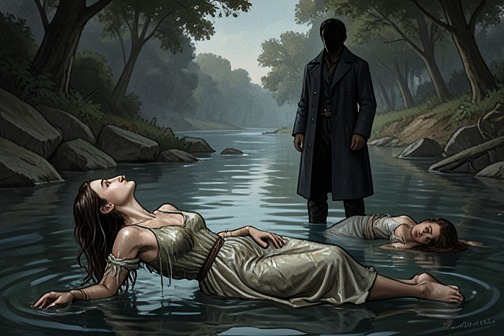
[Janet Chisum’s murder](entity:event-recall-event-janet-chisum-s-murder-d7c02f7420d3) is the hinge between a local scandal and a suspected interstate pattern of killings. The investigation first treats the connection as a possibility, then reveals a more intimate motive: [Victoria](entity:character-recall-character-victoria-fef24d0cf051) says she befriended Janet and her sister Sara before killing them.
## Background and the Suspected Pattern
The [Federal Bureau of Investigation](entity:organization-recall-organization-federal-bureau-o-f1c5664278d2) agent [Wurtzburger](entity:character-recall-character-wurtzburger-62dc79aa4b87) tells [Will Robie](entity:character-recall-character-will-robie-49c73e14ccc9) and [Jessica Reel](entity:character-recall-character-jessica-reel-8940da6dfd06) that he had not been candid about the team’s reason for being in the area: he was assigned to the Violent Criminal Apprehension Program, and the investigation concerned a possible serial killer. [Sherman Clancy](entity:character-recall-character-sherman-clancy-e1eb33939f61) and Janet’s deaths resemble eight other killings across four states over the preceding nine years. In the suspected pattern, an older man pays a younger woman for sex, the man is found with his throat cut in his car, and the woman is shot in the head and discarded in a body of water. The earlier cases were in New York, Pennsylvania, Tennessee, and Arkansas; the [Cantrell](entity:location-recall-location-cantrell-34566b0c2c27) deaths could represent a fifth pair.
## Janet’s Killing and the Unresolved Link
The suspected pattern did not settle who killed Janet. Investigators considered whether she had gone to meet someone for a payoff, only to be shot and thrown into the river. That account connected her death to money and to Sherman Clancy, but it remained an interpretation of the circumstances, not a confirmed identification of her killer. When Will Robie asked whether Clancy had killed her, [Billy Faulconer](entity:character-recall-character-billy-faulconer-b68eb1fd3e0a) described Clancy’s paid sexual encounters with Janet and noted that Victoria had supplied Clancy with an alibi. The exchange sharpened the question without answering it.
The [FBI](entity:organization-recall-organization-c3b9c0848e8c)’s comparisons also contained a significant mismatch. In the other cases, the younger woman and the older man were connected through paid sex, but the interval between the woman’s killing and the man’s death was shorter than in Cantrell. The Arkansas murders had occurred four years earlier; Jessica Reel calculated that the other killings were spaced roughly eighteen months apart and wondered whether the longer gap mattered. The pattern could link the deaths, yet the timing cautioned against treating resemblance as proof.
A separate line of inquiry suggested how Janet might have learned something worth selling. Will reasoned that Clancy could have disclosed secrets while drunk and having sex with the Chisum sisters; Janet, Emma had said, believed she could make money from information about important people in town. [Bobby Wendell](entity:character-recall-character-bobby-wendell-f7f5fd73bb4c) became a possible target of the sisters’ attempted blackmail, but Will doubted that the Wendells had arranged Janet’s death. He noted that Bobby had tried to recover the photographs used as blackmail material, and that after Sara had nearly been murdered by men involved in that effort, she was unlikely to have met them alone in the woods. The investigation was thus tracing overlapping motives—sexual exploitation, blackmail, and the sisters’ search for money—without yet establishing who had killed Janet.
## Victoria’s Confession and the Resolution
The uncertainty over Janet’s killer ends when Victoria identifies herself as the person who befriended both Janet and [Sara Chisum](entity:character-recall-character-sara-chisum-3d5dacb7eece) and then killed them. The revelation overturns the investigation’s competing theories: Janet’s death was not simply the work of a serial killer drawn to a recurring pattern, nor was her murder established as an act by the Wendells or Sherman Clancy. Victoria says she was the important person from whom Janet expected money. She dismisses Janet’s account as a lie, while acknowledging that Janet had told Sara a small part of the truth.
Victoria describes how she used that partial truth to draw Sara into danger after Janet was dead. She told Sara that her father might be the killer, urged her to leave Cantrell, and offered help while claiming sympathy. The offer concealed Victoria’s own role. Her admission makes the sisters’ pursuit of money and the clues about blackmail part of a deliberate deception: Victoria presented herself as a possible rescuer while concealing that she had killed Janet and had already decided to kill Sara. The confession resolves the central question of Janet’s murder by revealing that the apparent links among Clancy, the sisters, and the suspected interstate pattern had obscured a killer embedded in their immediate circle.
## The Wider Pattern Reconsidered
Victoria’s response to Will Robie’s question about the other killings widened the significance of her confession: she invoked her experience as a killer and treated the deaths of older men and younger women as acts she considered justified. She also offered a personal explanation for the four-year gap after the Arkansas murders: in that interval she met [Dan Robie](entity:character-recall-character-dan-robie-99bdd243c52e), married him, became pregnant, and had Tyler. The pause that had complicated the FBI’s comparison therefore belonged to Victoria’s life history, not necessarily to a different perpetrator or a broken pattern. Janet’s murder consequently sits within both a local web of exploitation and blackmail and a larger sequence of killings that Victoria claimed as her own.
Event 20
Sara Chisum’s murder
[Sara Chisum’s murder](entity:event-recall-event-sara-chisum-s-murder-17e79b6c8936) transforms an investigation into a failed attempt at prevention: [Will Robie](entity:character-recall-character-will-robie-49c73e14ccc9) and [Jessica Reel](entity:character-recall-character-jessica-reel-8940da6dfd06) reach the suspected meeting place early, but a gunshot announces that Sara has already been killed. Her death also belongs to a larger pattern of paired murders under investigation by the [FBI](entity:organization-recall-organization-c3b9c0848e8c), a connection later acknowledged by the killer.
## The Investigation and Surveillance
The investigation was not simply about casinos. Jessica Reel explained that she was assigned to ViCAP, the Violent Criminal Apprehension Program, whose work included serial killings. When Will Robie asked whether she had come to [Cantrell](entity:location-recall-location-cantrell-34566b0c2c27) to hunt a serial killer, she confirmed that the deaths of [Sherman Clancy](entity:character-recall-character-sherman-clancy-e1eb33939f61) and [Janet Chisum](entity:character-recall-character-janet-chisum-d1bc41d9e78b) were part of the reason.
The FBI had identified eight other killings across four states over nine years. In those cases, an older man and a younger woman were killed in roughly connected pairs: the man had paid the woman for sex, then was found with his throat slit in his car; the woman was shot in the head and left in a body of water. The Cantrell deaths seemed to fit that pattern, but not without a troubling difference. Reel calculated that the other cases were spaced roughly eighteen months apart, while the Arkansas killings had occurred four years earlier. She also asked whether the gap between the woman’s murder and the older man’s killing had been as long as in Cantrell; it had not.
Robie and Reel moved two hours ahead of the agreed time and approached the site on foot, leaving their car about a quarter mile away before splitting up to watch. Thunder rumbled beneath low clouds, and the heavy, humid air suggested an imminent downpour. The waiting ended not with the expected sound of an engine stopping or a car door opening, but with a gunshot cutting through the night.
## The Shot and the Failed Intervention
The gunshot broke the vigil before the expected arrival could be heard. Will Robie asked over his headset whether Jessica Reel had a sight line, then moved toward the dirt road. He found [Sara Chisum](entity:character-recall-character-sara-chisum-3d5dacb7eece) lying on her back in the short grass at the left shoulder; farther away, a vehicle’s taillights were already nearly out of sight. Robie fired six times at the fleeing car, but the shots did not stop it.
Reel reached Sara and tried to find a pulse at her carotid artery. There was none. The attempt to intervene had become a scene of death: the investigators had arrived early, divided their positions, and watched the road, yet the decisive sound came before they could prevent the killing or identify the escaping vehicle. Reel could not bend a bullet around the angle needed to hit the target, and the car disappeared.
Robie and Reel drove back to [The Willows](entity:location-recall-location-the-willows-1a37147db7d9) mostly in silence. Their mission had failed, and Sara was dead; Reel’s anger was sharpened by the fact that Sara’s character did not make her death deserved. She had been their best chance of gaining traction in the investigation, and losing her left them with one remaining option: [Pete Clancy](entity:character-recall-character-pete-clancy-6db1d8ff6f02). [Keith Monda](entity:character-recall-character-keith-monda-4053d2f42add) later remarked that Robie had been unable to save her this time, a judgment Robie accepted without protest.
## The Killer’s Later Admission
The pattern surrounding Sara Chisum’s death acquired a personal explanation much later, when Will Robie confronted the killer and asked whether she had committed the other murders that had brought the FBI to Cantrell. Her answer tied those killings to the same pairing of older men and younger women, and she described the gap after the Arkansas murders as the time it took to meet Robie’s father, marry him, and have Tyler. Sara’s murder was therefore not an isolated attack at a suspected meeting place but part of a series whose long pause coincided with the killer’s new family life.
The killer framed the repeated murders as a practiced response to her contempt for the men and women involved, treating murder as a self-appointed act of removal. That justification makes the event’s earlier investigative pattern more than a statistical resemblance: it points back to a deliberate offender whose private moral verdict had turned into repeated violence. Sara’s death had also been a decisive loss for the investigators, removing their best chance to gain traction; the later admission reveals that the person responsible had been close to the investigation’s central family history all along.
## The Rejection of Her Justification
When the killer presents the other killings as a practiced response to her contempt for the people involved, Will Robie refuses the moral disguise: he tells her that she committed murder and cannot explain it away. His answer does not undo the revelation that Sara Chisum’s death belonged to a wider series, but it denies the killer’s claim that private judgment could turn those deaths into justice.
Event 21
Dan Robie's Prosecution for Sherman Clancy's Murder
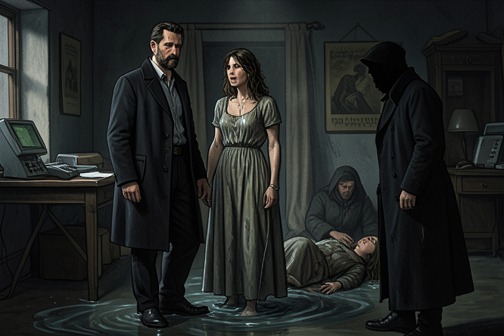
[Dan Robie](entity:character-recall-character-dan-robie-99bdd243c52e)’s prosecution for [Sherman Clancy’s murder](entity:event-recall-event-sherman-clancy-s-murder-d1bbc81a2d41) unfolds amid a widening investigation into killings across several states. The central dispute is whether Dan alone could account for the crimes or whether Clancy’s death and the murders of the Chisum sisters belong to a larger pattern.
## The Multistate Pattern
The investigation’s broader frame emerged when [Jessica Reel](entity:character-recall-character-jessica-reel-8940da6dfd06) disclosed that she was assigned to the Violent Criminal Apprehension Program, whose work included serial-killer cases. [Will Robie](entity:character-recall-character-will-robie-49c73e14ccc9) asked whether she had come to [Cantrell](entity:location-recall-location-cantrell-34566b0c2c27) hunting a serial killer; she confirmed that this was a fair description of the investigation and identified [Sherman Clancy](entity:character-recall-character-sherman-clancy-e1eb33939f61) and [Janet Chisum](entity:character-recall-character-janet-chisum-d1bc41d9e78b) as its local connection. The [FBI](entity:organization-recall-organization-c3b9c0848e8c) was examining eight other killings in four states over nine years, organized roughly in pairs: an older man who had paid a younger woman for sex was found with his throat slit in his car, while the woman was shot in the head and left in a body of water.
## The Case Against Dan Robie
The pattern offered a way to test the accusation against Dan Robie, but it also exposed a difference between the earlier cases and the Cantrell murders. In the other linked pairs, the younger woman and older man had been sexually involved for payment, and the interval between their deaths was shorter. In Cantrell, the killings were farther apart. Jessica Reel calculated that the other cases had occurred roughly eighteen months apart, while the Arkansas murders were four years before the investigation; she considered that longer gap potentially significant rather than proof that the cases were unrelated. The pattern therefore supplied both a connection and a question: whether the shared victim profile and methods outweighed the unusual delay.
That uncertainty shaped the argument over Dan’s prosecution. At a meeting about the case, defense attorney [Toni Moses](entity:character-recall-character-toni-moses-ed7a614280df) pressed [Aubrey Davis](entity:character-recall-character-aubrey-davis-4fb9321bacfa) on whether he genuinely wanted the real killer found. Davis affirmed that he did, but maintained that Dan remained charged with murder and was the only credible suspect. Will Robie answered with the accumulating body count and the fact that the attacks had nearly killed him and Reel. He was convinced that Sherman Clancy’s murder and the murders of Janet Chisum and [Sara Chisum](entity:character-recall-character-sara-chisum-3d5dacb7eece) had been committed by the same person. If the crimes were linked, Moses pointed out, Dan could not have killed Sara: he was in prison when she died.
Davis did not accept the linkage as established. For him, Dan’s exclusion depended on the premise that one person had committed all the murders, and he treated that premise as a substantial uncertainty. The prosecution thus remained active even as the serial-murder theory threatened to overturn its central case. The competing positions were not simply guilt against innocence: they turned on whether similarities across cases could support a single perpetrator strongly enough to displace the local suspect.
The immediate legal turn came when Moses told Will and Reel that the judge had set bail for Dan and that he had paid it. Dan was expected to leave the jail in about twenty minutes. Will and Reel waited across the street; when [Sheila Taggert](entity:character-recall-character-sheila-taggert-d78c60d04e99) emerged from the jail, Dan followed in the chino pants, white shirt, and loafers he had apparently worn at his arrest. Will began to get out of the car, but [Victoria Robie](entity:character-recall-character-victoria-robie-cfa30d6c2ee2) arrived first, leapt from her Volvo, hurried to Dan, and wrapped her arms around him. Reel read the embrace as a sign that guilt was not Will’s alone to feel. The release did not resolve the charge, but it changed Dan’s immediate circumstances from detention to reunion with his wife.
By the time Will and Reel reached [The Willows](entity:location-recall-location-the-willows-1a37147db7d9), [Victoria](entity:character-recall-character-victoria-fef24d0cf051)’s Volvo stood outside. [Priscilla](entity:character-recall-character-priscilla-4c0f8c1856b2) met them in the foyer with Tyler in tow, placing Dan’s return within the household even as the murder investigation remained unsettled. The sequence leaves the legal and familial consequences side by side: Dan is out on bail, yet still accused; his family can receive him, while the theory that might clear him remains contested.
## The Confession That Reframed the Case
The prosecution’s central uncertainty is resolved only later, when Victoria Robie explains how she anticipated Will Robie and Jessica Reel’s investigation. She knew they suspected her father and had discovered the shack, and she had kept informed about their inquiry. If they had not appeared there, she planned to return battered and disheveled with [Tyler Robie](entity:character-recall-character-tyler-robie-51f90085dd8f), present a credible story of kidnapping and assault, and rely on his inability to speak to prevent him from contradicting her. Her account turns the family reunion outside the jail into a bitter contrast: the wife who embraced Dan after his release was concealing a calculated effort to manipulate the investigation and kill Will and Jessica.
Asked whether she had committed the other murders under FBI investigation, Victoria acknowledged that she had. She described the older men and younger women in the paired killings as people she considered fit to be removed from the world, revealing a motive rooted in her own condemnation of them rather than an effort to clear Dan through the courts. The confession makes the FBI’s pattern more than a persuasive theory: the recurring victims and methods point back to Victoria, while Dan’s prosecution had placed suspicion on the wrong person.
Victoria also accounted for the interval that had complicated the linkage. After the Arkansas killings, she met Dan, married him, and became pregnant with Tyler; she said those events took time. The four-year gap Reel had identified as potentially significant therefore marks a period of change in Victoria’s life, not a break in the sequence of killings. In retrospect, the prosecution’s unresolved question—whether the Cantrell murders belonged to the same pattern—becomes the key to recognizing the crime behind Dan’s charge and the danger concealed within his household.
## What the Prosecution Leaves Unresolved
The revelation of Victoria Robie’s guilt settles the reader’s question of who committed the linked murders, but the available account does not establish that Dan Robie’s charge was formally dismissed or that he was cleared in court. That distinction matters: the prosecution’s case had been challenged through a theory of shared authorship, while the confession supplies the decisive answer beyond the competing inferences debated by Toni Moses and Aubrey Davis. Dan’s release on bail changed his custody, not the charge itself; the narrative resolves the hidden identity of the killer without documenting the legal conclusion of Dan’s case.
Event 22
Exposure of the Child-Abuse and Blackmail Scheme at Clancy Farm
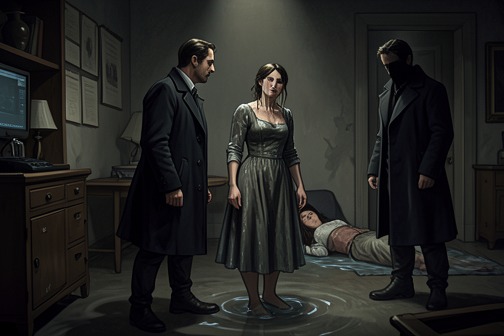
The exposure of the child-abuse and blackmail scheme at [Sherman Clancy](entity:character-recall-character-sherman-clancy-e1eb33939f61)’s farm turns a secluded shack into the center of a concealed network of exploitation and extortion. As [Will Robie](entity:character-recall-character-will-robie-49c73e14ccc9) and [Jessica Reel](entity:character-recall-character-jessica-reel-8940da6dfd06) investigate, testimony and photographs connect the abuse of children to Sherman Clancy, [Henry Barksdale](entity:character-recall-character-henry-barksdale-ae151328d8f5), and [Nelson Wendell](entity:character-recall-character-nelson-wendell-d20bad825db6)—and illuminate the criminal history behind the [Cantrell](entity:location-recall-location-cantrell-34566b0c2c27) murders.
## Background and the Emerging Pattern
The investigation widens when an [FBI](entity:organization-recall-organization-c3b9c0848e8c) agent reveals that the inquiry is not merely about casinos: the agent is assigned to the Violent Criminal Apprehension Program and is pursuing a possible serial killer. Sherman Clancy and [Janet Chisum](entity:character-recall-character-janet-chisum-d1bc41d9e78b) appear connected to eight other killings across four states over nine years. The victims were killed in rough pairs: an older man who had paid a younger girl for sex was found with his throat cut in his car, while the girl was shot in the head and left in a body of water. The pattern gives the Cantrell cases a chilling context, but its timing is not exact. The Arkansas murders had occurred four years earlier, whereas the other linked cases were spaced roughly eighteen months apart; Jessica Reel notes that the longer gap may matter. She also asks whether the earlier cases involved a long delay between the girl’s death and the older man’s, as there was in the Cantrell case. The emerging linkage is therefore a working pattern, not a complete explanation of how each killing relates to the others.
On Sherman Clancy’s farm, the history behind the blackmail scheme begins with seasonal laborers, including families from Mexico and Central America and Black itinerant workers. [Cassandra Clancy](entity:character-recall-character-cassandra-clancy-c16a5befb12a) recalls that she and her daughter watched the workers’ young children and sometimes taught them. According to her account, Henry Barksdale later approached Sherman with an offer connected to the children staying in the secluded shack at the edge of the property. That account reframes the shack: what had appeared as an isolated outbuilding becomes the place where access to vulnerable children was arranged.
## How the Arrangement Became Blackmail
Cassandra’s account describes a deliberate system of secrecy, not a chance encounter at an isolated building. She said the men generally arrived after she had left, because Sherman Clancy wanted fewer people to know what was happening. On one occasion, she returned late and saw Henry Barksdale and Nelson Wendell at the shack before they noticed her. She had not confronted them then; she later admitted that she had preferred not to know. Her testimony makes her role more complicated than that of a bystander: she knew children were being left there, and the arrangement continued behind a routine that kept her away when the men came.
The arrangement changed when Sherman began using what he knew for leverage. Cassandra said he did not tell her in advance that he intended to blackmail Nelson Wendell. She learned of the blackmail after Sherman identified the person buying their farm. His motive, as she described it, was greed and a need for a large sum of money to pursue his plans. The photographs of Nelson with the children supplied the leverage: Sherman used them to force Wendell toward a purchase at an exorbitant price. Cassandra called Wendell Sherman’s golden goose, a phrase that reduces the relationship to its financial logic—continued access and silence converted into an opportunity for profit.
The farm’s sale and the abuse were therefore bound together by money, but the accounts do not make the participants’ positions identical. Cassandra said Henry had brought Sherman into the arrangement and that Sherman believed he owed Henry for that introduction; she insisted Sherman would not have acted against Barksdale. She also said Sherman had been paid for his services before the blackmail began. The photographs then gave him a way to demand more from Wendell, while exposing Sherman himself to danger if the truth emerged. Will Robie recognized that the blackmail could implicate everyone involved, not only the person being threatened.
Evidence from [Pete Clancy](entity:character-recall-character-pete-clancy-6db1d8ff6f02) independently points back to the same secluded shack and a deal involving photographs. When Will Robie asked how Sherman had obtained the pictures, Pete resisted answering; under pressure, he said his father had made a deal with the man who took them. That admission does not identify the photographer, but it connects Sherman’s possession of the images to an agreement rather than an accidental discovery. During Cassandra’s later questioning, Will produced a photograph and asked whether it had been taken inside the shack; she looked at it and quickly looked away. Jessica Reel identified the man pictured as the late Nelson Wendell. Together, Pete’s account, the image, and Cassandra’s testimony turn the shack from a concealed location into a material link between the abuse, the photographs, and the extortion.
## Consequences for the Murder Investigation
The evidence tied to the farm did more than establish how Sherman Clancy had obtained photographs. It changed the meaning of the murders under investigation. The [Federal Bureau of Investigation](entity:organization-recall-organization-federal-bureau-o-f1c5664278d2) had identified a recurring pattern across four states: older men who paid younger girls for sex were killed in their cars, while the girls were shot and abandoned in water. Janet Chisum and Sherman Clancy appeared to fit that pattern, but the gap between their deaths was longer than in the other cases. The pattern supplied a possible connection, not a sufficient account of who had killed them or why.
[Victoria Robie](entity:character-recall-character-victoria-robie-cfa30d6c2ee2) eventually supplied that missing account for the Chisum sisters. She admitted that she had befriended Janet and Sara, then killed them. Janet, she said, had been planning to make money from secrets about influential people; [Victoria](entity:character-recall-character-victoria-fef24d0cf051) claimed that she herself had been the person expected to provide it. After Janet’s death, Victoria directed suspicion toward Sara’s father, suggesting that his religion had made him unstable, and offered Sara help leaving town. The offer was a means of control: Victoria arranged to meet Sara away from the road and killed her there. What had seemed to Sara like sympathy and rescue was, in Victoria’s account, a calculated deception.
Victoria also explained how she had anticipated Will Robie and Jessica Reel’s investigation. Because they had kept her informed and she had asked discreet questions, she knew they suspected her father and had discovered the shack. She expected them to come there; if they did not, she planned to appear beaten and disheveled, carrying the non-speaking [Tyler Robie](entity:character-recall-character-tyler-robie-51f90085dd8f), and claim that she had been kidnapped and assaulted. She said she would have killed the investigators later if they had not arrived as expected. Her account thus turned the investigation itself into part of her plan: information shared with her under the assumption of family trust had helped her prepare a false story and an ambush.
Asked whether she had killed the other people being investigated, Victoria answered that she had. She connected the interval after the Arkansas killings to meeting [Dan Robie](entity:character-recall-character-dan-robie-99bdd243c52e), marrying him, becoming pregnant, and having Tyler. The revelation both confirmed a serial pattern and exposed its limits: the murders were linked by Victoria’s repeated targeting of older men and younger women, while the pauses between them followed changes in her personal life. The farm’s abuse and blackmail scheme did not by itself identify the killer, but its people, photographs, and concealed history opened the path to the confession that resolved the wider case.
## The Staged Clue and the Failed Cover Story
Victoria Robie’s confession also explained how she tried to make the vehicle evidence support a false account. She had put a bullet into the Rover, and Will Robie covered the hole with a [New Orleans](entity:location-recall-location-new-orleans-ac6617a07d7e) Saints sticker. Later, she fired another round into the Rover in Sherman Clancy’s garage to make it appear that the vehicle had been used in the relevant crime. The detail she overlooked was Dan Robie’s loyalty to the Cowboys: the Saints sticker was inconsistent with the family clue she had failed to account for. Under pressure to finish cleaning the vehicle before Will and Jessica Reel arrived, she washed it and another car, then used Tyler Robie running beneath the hose to distract them. The extra washing itself risked drawing attention, since the Rover was supposedly untouched after Dan’s arrest.
Victoria’s account of [Sara Chisum](entity:character-recall-character-sara-chisum-3d5dacb7eece)’s death likewise distinguished what she had planned from what went wrong. She said she had not known Will and Jessica would be present when she killed Sara; seeing Sara in town gave her the chance to redirect the meeting from the clearing to a spot just off the road. That improvisation delayed the investigators’ confrontation with her, while the planted vehicle evidence and the anticipated false kidnapping story show how she tried to control what they would believe. The confession thus resolved the murder pattern not only by identifying Victoria as the killer, but by revealing the practical misdirection through which she had sought to turn the investigation away from herself.
Event 23
Robie and Reel Ambushed at the Clancy Estate
The ambush at [Sherman Clancy’s mansion](entity:location-recall-location-sherman-clancy-s-man-2e6d4f25a45c) converts a compromised refuge into a fight for escape: [Will Robie](entity:character-recall-character-will-robie-49c73e14ccc9) and [Jessica Reel](entity:character-recall-character-jessica-reel-8940da6dfd06) must judge their defense, seize a vehicle, and get beyond the attackers before the confrontation ends in an explosion. The sequence hinges on quick tactical choices, but its final image withholds whether either of them can rise again.
## Warning and the Breach
The immediate warning comes by phone from [Bobby Wendell](entity:character-recall-character-bobby-wendell-f7f5fd73bb4c), who sounds frantic and tells Will Robie there is a problem. When Robie asks what kind, Bobby answers that it is more Robie’s problem than his. The exchange offers little explanation, but its urgency is soon made concrete: Jessica Reel spots headlights approaching through the gates.
Two SUVs drive in fast and stop beside the house. Their drivers make no effort to conceal the approach or arrive quietly. The speed and noise announce that the confrontation is already moving from warning to assault, leaving little time for Robie and Reel to prepare a more secure position.
In the garage, Reel identifies a decisive weakness: an opening in their defense that attackers could swarm, then use to strike from behind. They could also fire through the wooden wall until they hit someone inside. Robie agrees with her assessment and proposes that they extract themselves. Their immediate objective is therefore not to hold the garage, but to escape before the attackers can turn its exposed sides into a pincer.
## The Garage Fight
The vehicles offer unequal possibilities. Robie considers [Sherman Clancy](entity:character-recall-character-sherman-clancy-e1eb33939f61)’s Range Rover, only a couple of years old and difficult to hot-wire because its systems are electronic. Sherman Clancy’s vintage Bentley is the more practical choice. Its age makes it usable in a way the newer vehicle is not, and it has been parked backed into the garage, sparing Robie the need to make a difficult turn under attack.
Robie crosses the Bentley’s wires and starts it. Outside, the attackers charge toward the garage firing their weapons. Their gunfire gives away their positions, changing the assault’s noise into information Reel can use. She returns fire methodically and with pinpoint accuracy. The brief exchange thus exposes a contrast between the attackers’ overt rush and Reel’s controlled response, while the garage’s vulnerability continues to make remaining inside untenable.
## Escape Through the Gate
Robie drives the Bentley out as the attack continues. He swerves to avoid one SUV, and the car crashes into the other. The impact shifts that vehicle enough for the Bentley to get past; its front right wheel is pushed in, leaving it inoperable. The escape is not a clean dash through an open route but a forced passage made possible by turning one of the attackers’ vehicles into an obstruction.
Seconds later, the Bentley clears the gate. Robie turns left onto the asphalt and continues down the road in the damaged car. He checks the back seat and sees blood on Reel’s face. When he calls to ask whether she is all right, she tells him to keep going. Her response keeps their attention on escape rather than pausing to assess her condition, and the scene supplies no further account at this point of the blood’s severity.
## Explosion and Uncertain Outcome
The flight does not end with their passage through the gate. Later, Robie makes one more cut, and the belt breaks; he pulls Reel over into the front seat, and they flee through the driver’s-side door. The precise reason for this change of position is not stated in the supplied passage, but the action makes clear that the Bentley is no longer a safe place to remain.
They have reached a point twenty feet from the car when vapor ignites. The blast’s concussive force knocks them down and sends them tumbling across uneven ground near the tree line. Neither moves afterward. That stillness closes the ambush without confirming either character’s fate: the escape from the armed men has brought Robie and Reel beyond the garage and the gate, but not beyond immediate physical danger. The sequence’s decisive reversal is from tactical movement to helpless immobility, with the explosion replacing the gunfire as the final force controlling what happens to them.
Event 24
Murder of Emmitt Barksdale
The murder of [Emmitt Barksdale](entity:character-recall-character-emmitt-barksdale-25fd7e6314c2) became a turning point in an investigation already shadowed by multiple deaths: his body linked the local cases to a wider pattern, but the circumstances of his death resisted a simple explanation. The discovery offered investigators striking evidence of deliberate violence and, at the same time, an early indication that the fatal method might be poison.
## Discovery and Initial Findings
[Will Robie](entity:character-recall-character-will-robie-49c73e14ccc9) and [Jessica Reel](entity:character-recall-character-jessica-reel-8940da6dfd06) searched the house room by room before reaching the hall bathroom, where they found Emmitt dead in the bathtub. Robie recognized him as the man he had seen in the bushes at [The Willows](entity:location-recall-location-the-willows-1a37147db7d9). The body showed no obvious fatal wound, and Robie noted that it was not in rigor; Reel reasoned that rigor had already passed, suggesting Emmitt had been dead for at least twenty-four hours. A separate, conspicuous act of mutilation made the scene appear purposeful, though it did not establish how he had died.
## Cause of Death and the Wider Pattern
The initial examination did not settle how Emmitt had died. The coroner found no apparent fatal wound and noted bloodstained froth in his mouth and airway, signs that pointed toward poisoning, possibly cyanide. She stressed that toxicology and the autopsy were still needed to identify the substance and confirm the cause. The body’s condition therefore left the investigators with a suspected method, not yet a final forensic conclusion.
The coroner also observed an indentation in the bathtub that could have been made by the tool used to mutilate Emmitt. She regarded that act as potentially symbolic, while the investigators considered whether he had been killed as a loose end. Neither interpretation explained the motive by itself; their discussion returned to the children in the shack, [Henry Barksdale](entity:character-recall-character-henry-barksdale-ae151328d8f5), and [Sherman Clancy](entity:character-recall-character-sherman-clancy-e1eb33939f61), suggesting that Emmitt’s death might reach back into the older events they were uncovering.
That uncertainty acquired a wider context when the [Federal Bureau of Investigation](entity:organization-recall-organization-federal-bureau-o-f1c5664278d2) disclosed that its Violent Criminal Apprehension Program was examining the Clancy and [Janet Chisum](entity:character-recall-character-janet-chisum-d1bc41d9e78b) cases alongside eight other killings across four states over nine years. The cases shared a pattern involving older men and younger women connected by paid sex, with the victims killed in pairs. The spacing was not uniform: one earlier pair in Arkansas dated to four years before, and Jessica Reel noted that the killings had otherwise occurred at roughly eighteen-month intervals. The gap between the woman’s death and the older man’s death was also longer in the [Cantrell](entity:location-recall-location-cantrell-34566b0c2c27) case than in the other linked cases, a difference that made the apparent pattern important but not conclusive.
The investigation’s eventual confrontation with [Victoria Robie](entity:character-recall-character-victoria-robie-cfa30d6c2ee2) gave the series a human source: when asked whether she had killed the other people under [FBI](entity:organization-recall-organization-c3b9c0848e8c) investigation, she affirmed that she had, and explained the long gap by referring to her marriage to [Dan Robie](entity:character-recall-character-dan-robie-99bdd243c52e) and the birth of Tyler. In retrospect, Emmitt’s death belonged to that series, while its poison suspicion and symbolic mutilation had initially left the investigators unsure how it connected to the earlier killings.
## The Unresolved Connection
After the coroner and Taggert left, Will Robie and Jessica Reel considered whether Emmitt Barksdale had been killed to prevent him from revealing something, or because of a connection to [Jane Smith](entity:character-recall-character-jane-smith-9c8f43913a78). Robie wondered whether Jane Smith might be [Laura Barksdale](entity:character-recall-character-laura-barksdale-ad28e86cce79), but neither the identity nor the reason for the suspected link was established. Their questions kept Emmitt’s death within the larger investigation: the possible connection to Jane Smith, and the earlier events involving the children in the shack, remained leads rather than answers.
## Attribution and the Investigation’s Stakes
The later confrontation revealed that Victoria Robie had been following the investigation closely: she knew Will Robie and Jessica Reel suspected her father and had discovered the shack. She had prepared a fallback story in which she would reappear injured with [Tyler Robie](entity:character-recall-character-tyler-robie-51f90085dd8f) and claim they had been kidnapped, intending to kill the investigators if they did not come to the shack. When Will asked whether she had killed the people the FBI was investigating, she admitted that she had. Her explanation connected the killings’ long interruption to the years in which she married Dan Robie, became pregnant, and raised Tyler. This disclosure retrospectively placed Emmitt Barksdale’s death within her series of murders and showed that the initial uncertainty about its connection to the other cases had concealed a continuing plan.
Event 25
Dan Robie Conceals the Truth About Will's Departure from Laura Barksdale
[Dan Robie](entity:character-recall-character-dan-robie-99bdd243c52e)’s deception of [Laura Barksdale](entity:character-recall-character-laura-barksdale-ad28e86cce79) is revealed during a confrontation that changes [Will Robie](entity:character-recall-character-will-robie-49c73e14ccc9)’s understanding of what happened after he left. Dan had told Laura that Will had gone away to start fresh, allowing her to believe that Will had deliberately abandoned her. When Dan finally admits this, Will’s effort to speak openly about his own failures gives way to anger, and he walks out before that anger becomes action.
## The revelation during Will’s confession
Will begins by trying to explain the demands of his work to Dan. He says that his job requires absolute precision, but that he had not been perfect on his last two missions. He admits that he killed someone he should not have killed and, on the next mission, saw a little boy and an old man who were not there. They existed only in his head. Although Will had rehearsed what he wanted to tell his father, he cannot get the rest of his words into order.
The case clock in the foyer ticks while father and son stare at one another. After the long pause, Dan introduces a different wound: he tells Will that he had told Laura that Will left without her. The disclosure abruptly redirects the conversation. Will experiences it like a bullet striking his brain and asks when Dan said it, trying to contain his reaction.
## What Dan told Laura and why
Dan explains that Laura came by a few days after Will’s departure to ask where he was. Will’s belongings were gone, as was his old car, and he had left no note for Dan. Dan says he knew Will had left and feared that something might have happened to him. He strikes the table with his fist as he insists that anything could have happened to his son.
But Dan had not simply told Laura that Will was missing. He had told her that Will wanted to begin life afresh away from [Cantrell](entity:location-recall-location-cantrell-34566b0c2c27). When Will says Dan had no right to tell her anything, Dan argues that being Will’s father gave him that right, even if Will had run away. He had interpreted Will’s departure without Laura as evidence that Will did not want her, and says he told her so outright. His explanation identifies the basis of the deception: Dan treated Will’s absence and silence as an answer about Laura, rather than leaving that answer for Will to give.
## Laura’s response and the confrontation’s turn
Will asks what Laura did after hearing Dan’s account. Dan says she ran off crying. He lowers his head, and the anger that had marked his expression disappears. The account makes the consequence of his intervention immediate: Laura had come looking for Will, and Dan’s explanation left her in tears.
Will, however, feels his anger building. He tells Dan to shut up, and Dan looks up with anger of his own. Seeing Will’s expression, he appears afraid for his life, perhaps for the first time since Vietnam. Will turns and walks out before he does something he might regret. The scene thus ends not with reconciliation or an answer from Will about Laura, but with a physical withdrawal that interrupts the escalation.
## Significance within the family conflict
The revelation exposes a second absence beneath Will’s departure: Laura was not simply left without an explanation from Will; Dan supplied one on his behalf. Dan’s fear for his son and his authority as a father are part of his defense, but his certainty about what Will’s departure meant caused him to speak for Will to Laura. The confession also lands at the moment Will is trying, unsuccessfully, to tell Dan about the failures and disturbing perceptions that have unsettled him. Instead of completing that confession, Will must confront a painful account of the past. His decision to leave preserves the possibility of continuing the conversation while preventing the immediate conflict from becoming irreversible.
Event 26
Death of Billy Faulconer
[Billy Faulconer](entity:character-recall-character-billy-faulconer-b68eb1fd3e0a)’s death is reported rather than witnessed: after returning to [The Willows](entity:location-recall-location-the-willows-1a37147db7d9), [Will Robie](entity:character-recall-character-will-robie-49c73e14ccc9) and [Jessica Reel](entity:character-recall-character-jessica-reel-8940da6dfd06) find [Little Bill Faulconer](entity:character-recall-character-little-bill-faulcon-8493fe2caaad) waiting on the porch, grieving the death of his father, who was forty-one. Little Bill says his mother found Billy in the Airstream that morning. The news opens a final reckoning with Billy’s last days, as Robie’s impression that his old friend had been alone gives way to a fuller account of the care Billy received and the choices he made.
## The news at The Willows
Robie and Reel return to The Willows to find Little Bill on the porch. Robie asks whether everything is all right, but Little Bill shakes his head. His eyes are red and his face puffy; when Robie asks if the trouble is his father, Little Bill nods and wipes his eyes. The gestures make the news visible before he speaks: Billy has died that morning, and his mother found him in the Airstream.
The report is spare, but its details establish the circumstances the scene can confirm. Billy died in the place where he had been staying, and his death was discovered by a family member. Little Bill gives no cause of death or account of the moment itself. Instead, the conversation turns to the abrupt fact of his father’s age: Billy was only forty-one. Robie agrees that he was far too young to die, recognizing the loss without trying to explain it away.
Little Bill also tells Robie and Reel that the funeral will be on Thursday and invites them to attend. The invitation carries the news beyond the porch: Billy’s death has become a family loss with a date for communal remembrance. In the immediate scene, however, the focus stays with the son who has just lost his father and with the two people who have returned to find him in grief.
## Billy’s choice to remain in the Airstream
The later explanation from [Dr. Holloway](entity:character-recall-character-dr-holloway-49ce2797c00c) changes how Robie understands Billy’s final circumstances. Robie had seen Billy in the trailer with an oxygen tank and taken that sight as evidence that his old friend was alone. He admits to Holloway that he did not know what had been done for Billy and that the scene had given him that impression. The death itself is not revised; what changes is Robie’s interpretation of the life and care surrounding it.
Holloway describes a sustained effort to manage Billy’s pain and monitor his condition. Billy received morphine and other pain medication daily through a port Holloway had placed in his forearm. Either Holloway or [Angie Faulconer](entity:character-recall-character-angie-faulconer-a3a5910a46b6) would travel to him, and Holloway had instructed Angie precisely in how to administer the medication and check his condition. A portable sensor worn beneath Billy’s clothing was read every two hours, and Holloway adjusted the pain medication according to those readings. He tells Robie that every possible treatment had been provided to limit Billy’s suffering.
Holloway and Angie had urged Billy to enter hospice. Holloway had located a nearby facility and made arrangements; home hospice through a local agency was also available. He had completed the forms, and government funding meant that the care would not have cost the family anything. Billy nevertheless did not want to leave the Airstream. Holloway says he would not question the wishes of a dying man. His explanation does not erase the starkness of the trailer Robie saw, but it distinguishes Billy’s chosen place from neglect: care was arranged, delivered, and adapted to his condition, while the decision to stay was Billy’s.
## Memory, grief, and correction
Holloway also explains that Billy’s short-term memory had been affected, while memories from long ago might remain clear. He suggests that, as the end approached, familiar memories could offer comfort. The distinction gives Billy’s final period another dimension: his condition had changed what he could retain, but did not necessarily erase the older memories that mattered to him. The account remains Holloway’s explanation; the scene does not supply Billy’s own description of what those memories meant.
Robie responds to Holloway’s account with contrition. He says that he had got the situation completely wrong and apologizes for making a fool of himself. Holloway does not accuse him of bad intentions: he recognizes that Robie was looking out for an old friend. Robie accepts the kindness but doubts that he deserves it. Their exchange makes the aftermath more than a report of death. It records the correction of a judgment Robie had made from what he could see, and the difference between concern and knowing the full circumstances of another person’s care.
## Consequences and significance
Little Bill’s grief, Robie’s regret, and Holloway’s account converge around Billy’s final choice. The Airstream is both where his mother found him and the place he had refused to leave, even when hospice elsewhere or at home had been arranged. The evidence supports neither a claim that he was abandoned nor a claim that the arrangements made his death less painful for those left behind. It shows a network of practical care alongside a decision Holloway regarded as Billy’s to make.
The event also leaves its consequences in ordinary particulars: Little Bill’s tear-swollen face, the Thursday funeral, Robie’s apology, and Holloway’s measured account of medication and monitoring. Billy is absent from these conversations, so other people must describe what his last days were like and what his choices meant. The death brings those accounts into view without resolving every uncertainty, while forcing Robie to reconsider the difference between seeing a friend in distress and understanding the care that surrounded him.
Event 27
Murders of the Chisum Sisters
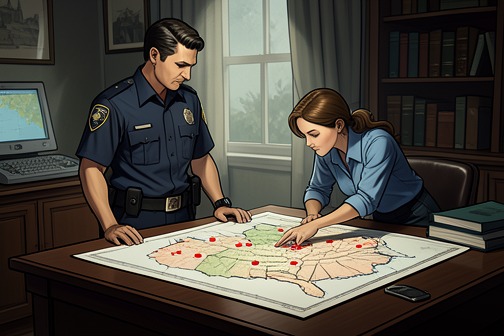
The [Murders of the Chisum Sisters](entity:event-recall-event-murders-of-the-chisum-s-00a580b02354) draw the local deaths of Janet and [Sara Chisum](entity:character-recall-character-sara-chisum-3d5dacb7eece) into a suspected multistate series, changing the investigation from a search for a local killer into a hunt for a possible serial murderer. The apparent pattern is strong enough to invite comparison, but differences in timing and in the victims’ connections leave important questions unresolved.
## Pattern and Investigation
The [Federal Bureau of Investigation](entity:organization-recall-organization-federal-bureau-o-f1c5664278d2) investigation reached [Cantrell](entity:location-recall-location-cantrell-34566b0c2c27) through the Violent Criminal Apprehension Program, to which [Jessica Reel](entity:character-recall-character-jessica-reel-8940da6dfd06) was assigned. She disclosed that the casino investigation was not the full reason for her presence: [Sherman Clancy](entity:character-recall-character-sherman-clancy-e1eb33939f61)’s and [Janet Chisum](entity:character-recall-character-janet-chisum-d1bc41d9e78b)’s murders were being compared with eight other killings across four states over nine years. In those cases, an older man and a younger woman were killed in roughly paired circumstances. The man, who had paid the woman for sex, was found with his throat slit in his car; the woman was shot in the head and left in a body of water. The repeated victim pattern and methods suggested a connection, but did not by themselves settle whether the Cantrell murders belonged to the same series.
## Timing and the Limits of the Pattern
The chronology complicates the suspected link. The Arkansas murders had occurred four years before the Cantrell killings, whereas the other cases were spaced roughly eighteen months apart. Jessica Reel identified that longer interval as potentially significant, and the comparison also exposed a difference in the victims’ relationship: in the other cases, the younger woman and older man had been sexually involved for payment. [Will Robie](entity:character-recall-character-will-robie-49c73e14ccc9) acknowledged that his father had a motive to kill Sherman Clancy, but [Wurtzburger](entity:character-recall-character-wurtzburger-62dc79aa4b87) pointed out that this did not explain Janet Chisum’s death. The gap between the two Cantrell killings was also longer than in the other cases. These discrepancies leave the multistate pattern suggestive rather than conclusive, and make the connection between Janet and Clancy central to determining whether the local murders belong to it.
## [Victoria](entity:character-recall-character-victoria-fef24d0cf051)’s Confession and the Murders
Victoria disclosed that she had befriended Janet Chisum and Sara Chisum before killing both. She described the sisters as having sold sex to Sherman Clancy for money, and framed her actions as stopping what she saw as the exploitative arrangement between older men and younger women. Her account exposed a sharp divide between the sympathy she had performed and the violence she had concealed: she had offered Sara help and a chance to leave town, while secretly shaping Sara’s understanding of who might have killed Janet.
Janet’s murder depended on a carefully manufactured alibi. On the night she had arranged to meet Janet, Victoria went to [Biloxi](entity:location-recall-location-biloxi-7b8b503c9fc0) and left Ty with [Priscilla](entity:character-recall-character-priscilla-4c0f8c1856b2), then returned to Cantrell and went to Sherman Clancy’s home, knowing [Pete Clancy](entity:character-recall-character-pete-clancy-6db1d8ff6f02) was away. She let Sherman believe they would be alone together, drank nothing herself, and kept him occupied by flirting while he drank. After slipping a sleeping pill into his drink, she left and killed Janet, then returned to Sherman’s house. What others took to be Sherman’s alibi for Janet’s murder had actually made him Victoria’s alibi.
Sherman eventually realized that Victoria had not been there when he woke and connected her absence with Janet’s death. After he was arrested for the murder, Victoria supplied an alibi that helped secure his release, concealing that he had unknowingly provided one for her. Sherman later confronted her with what he had worked out and tried to blackmail her; Victoria said she had already planned to kill him. His death, she explained, was also meant to direct suspicion toward Will Robie’s father by arranging the appearance of an unfaithful wife, an angry husband, and a dead lover. The confession thus recast the local investigation: the apparent case against Sherman and the motive attributed to Will’s father were parts of Victoria’s design, not explanations of who killed Janet.
Victoria also admitted that she had killed Sara after luring her to meet away from the road, and acknowledged killing the other victims the Federal Bureau of Investigation had linked to the Cantrell cases. She said the interval after the Arkansas killings had included meeting Will’s father, marrying him, and having Ty. Her admission resolves the suspected link between the sisters’ murders and the wider series as a matter of culpability, while revealing how the local killings had been disguised through staged explanations, borrowed alibis, and the manipulation of those investigating them.
## Staged Evidence and Exposure
Victoria also manipulated physical evidence to make the Range Rover appear connected to the case against [Dan Robie](entity:character-recall-character-dan-robie-99bdd243c52e). She had put a bullet into it and covered the hole with a [New Orleans](entity:location-recall-location-new-orleans-ac6617a07d7e) Saints sticker, then fired another round into the vehicle in Sherman Clancy’s garage to suggest it had been used. The detail she overlooked was Dan’s allegiance to the Cowboys: the Saints sticker did not fit him. When Will and Jessica arrived, Victoria was washing the cars; she used Ty running beneath the hose to distract them while she continued covering her tracks. These small, hurried acts show how the murders’ apparent evidence was constructed—and how an incongruous football sticker could expose the construction.
Event 28
Sherman Clancy's Murder and Dan Robie's Framing
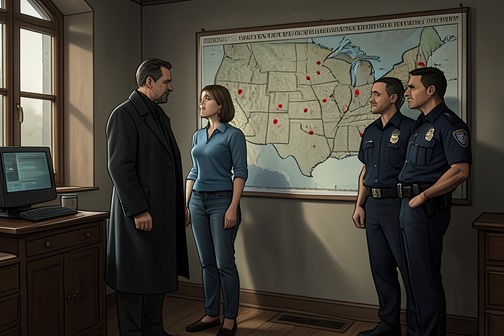
[Sherman Clancy’s murder](entity:event-recall-event-sherman-clancy-s-murder-d1bbc81a2d41) and [Dan Robie](entity:character-recall-character-dan-robie-99bdd243c52e)’s framing turn an apparent local murder case into two overlapping investigations: one tracing a recurring pattern of killings across state lines, the other uncovering how [Victoria Robie](entity:character-recall-character-victoria-robie-cfa30d6c2ee2) used Clancy’s death to implicate Dan. The eventual explanation reverses the apparent alibi and exposes the murders as parts of a deliberate design rather than the crimes the initial evidence seemed to describe.
## A Cross-State Pattern
The connection between [Sherman Clancy](entity:character-recall-character-sherman-clancy-e1eb33939f61) and [Janet Chisum](entity:character-recall-character-janet-chisum-d1bc41d9e78b) brought the [Federal Bureau of Investigation](entity:organization-recall-organization-federal-bureau-o-f1c5664278d2) to [Cantrell](entity:location-recall-location-cantrell-34566b0c2c27). Its agent, [Wurtzburger](entity:character-recall-character-wurtzburger-62dc79aa4b87), disclosed that he was assigned to the Violent Criminal Apprehension Program, whose work included serial-killer investigations. When [Will Robie](entity:character-recall-character-will-robie-49c73e14ccc9) asked whether the agents were hunting a serial killer, Wurtzburger confirmed that this was a fair description of their purpose. The investigation was therefore broader than the casino inquiry the agents had initially described.
Wurtzburger identified eight other killings in four states over the preceding nine years. Across those cases, the victims appeared in roughly paired stories: an older man paid a younger girl for sex; the man was later found with his throat slit in his car, while the girl had been shot in the head and thrown into a body of water. Clancy’s and Janet’s murders recalled this pattern closely enough to bring them under federal scrutiny, though the broad similarity did not itself establish that every case had the same circumstances or perpetrator.
The chronology made the Cantrell case more difficult to fit neatly into the pattern. The Arkansas murders had occurred four years earlier, whereas the other killings were spaced at roughly eighteen-month intervals. [Jessica Reel](entity:character-recall-character-jessica-reel-8940da6dfd06) quickly recognized that this longer gap might matter. She also asked whether, in the other cases, the girl’s death and the older man’s killing had been separated by as much time as in Cantrell; Wurtzburger said they had not. The repeated method suggested a connection, but the differences in timing left an important uncertainty in the investigators’ theory.
## The Reversal of the Alibi
Victoria Robie’s confession overturned the story that had appeared to explain Sherman Clancy’s death and the Janet Chisum investigation. The alibi that seemed to clear Clancy of Janet’s murder had, in fact, served [Victoria](entity:character-recall-character-victoria-fef24d0cf051): Clancy’s presence gave her cover while she killed Janet. She had arranged to meet Janet that night, gone to [Biloxi](entity:location-recall-location-biloxi-7b8b503c9fc0), and left her young son, Ty, with [Priscilla](entity:character-recall-character-priscilla-4c0f8c1856b2) in her room. She then returned to Cantrell and went to Clancy’s home by prior arrangement, knowing his son Pete was away and Clancy expected them to be alone.
Victoria described making the evening look like a drinking-and-sex encounter while keeping control of what happened. Clancy drank; she poured her own drink down the sink, flirted with him, and let him grope her to hold his attention. She slipped a sleeping pill into his drink. Once he had passed out, she left, killed Janet, and returned to Clancy’s. The arrangement reversed the apparent direction of the alibi: people believed Victoria had vouched for Clancy, when Clancy’s unconscious presence had actually supplied Victoria with cover.
Clancy eventually began to remember that Victoria had not been there when he woke. After learning Janet had been killed that same night, he put together what her absence might mean. He was arrested for Janet’s murder, and Victoria then supplied the alibi that helped get him released, a move that concealed her own role while seeming to rescue him. After his release, Clancy secretly met with her and told her what he had worked out. He tried to blackmail her; Victoria said she had already planned to kill him regardless.
Her explanation also connected Clancy’s murder to the evidence later found in [Sherman Clancy's Range Rover](entity:object-recall-object-sherman-clancy-range-r-9e0ed669e1cf). On the night she killed Sara, Victoria returned to the Clancys’ and left a photograph in the vehicle, then put a bullet into it. The police had already searched the car, she reasoned, and were unlikely to search it again. She called the photograph a reminder of who had really killed Clancy: she had slit his throat earlier, having led him to expect sex, and left him dead instead. The staged clue did not merely conceal her part in the murder; it helped make the evidence point toward Dan Robie.
Victoria’s larger design was to turn Clancy’s death into a convincing case against Dan. She described the intended story as an unfaithful wife, an angry husband, a dead lover, and an arrest that would ruin a supposedly noble life. Dan had a plausible motive against Clancy, and Victoria exploited that appearance, planting evidence against him. Her stated purpose was revenge on Will Robie because she did not know where he was; she said she had searched for him and could not find him, then encountered him at [The Willows](entity:location-recall-location-the-willows-1a37147db7d9) when he returned to Cantrell. Dan became the target through whom she could strike at the son she had been unable to reach. The framing therefore depended not on a single false clue but on a carefully assembled narrative that made Dan’s arrest seem to follow naturally from the relationships and resentments surrounding Clancy.
When Will asked whether Victoria had committed the other killings under investigation by the Federal Bureau of Investigation, she answered with a boast that practice made perfect and spoke approvingly of removing men and women she despised. She linked the long interval after the Arkansas murders to the time it took to meet Dan, marry him, become pregnant, and have Ty. Her admission made the cross-state pattern more than a resemblance: it connected the earlier killings to the same perpetrator and showed how a pause in the murders coincided with the formation of the Robie family. The disclosure also stripped the apparent domestic alibi of its protective meaning. The family life Victoria had built had not interrupted the violence; in her account, it had occupied the interval between its repetitions.
## The Planned Encounter at the Shack
Victoria had also prepared for the possibility that Will Robie and Jessica Reel would come to the shack. She had kept abreast of their investigation, using what they shared and discreet questions of her own to learn that they suspected Dan Robie and had discovered the location. If Will did not appear, she planned to return battered and disheveled with [Tyler Robie](entity:character-recall-character-tyler-robie-51f90085dd8f), tell a credible story of kidnapping and assault, and rely on Tyler’s inability to speak to prevent him from contradicting her. She intended to kill Will later in that scenario. His arrival instead brought her plan into the open and made the shack the place where the investigation’s false trail met its maker.
The confrontation completed the reversal at the heart of the case: Victoria had not merely exploited evidence that happened to implicate Dan; she had anticipated the investigators’ movements and constructed alternative explanations to keep suspicion away from herself. When Will confronted her with the fact that she had committed murder, she offered no account that could undo it. The framing had nearly made Dan’s plausible motive stand in for proof, while Victoria’s own careful planning had hidden the difference between the apparent alibi and the real one. Her exposure recast the supposed rescue of Sherman Clancy, the planted photograph, and the cross-state killings as elements of a single scheme.
## The Case Against Dan and the Missing Link
Dan Robie’s apparent motive could explain hostility toward Sherman Clancy, but Will Robie recognized that it did not explain [Janet Chisum’s murder](entity:event-recall-event-janet-chisum-s-murder-d7c02f7420d3). Jessica Reel pressed the other distinction: whether the earlier paired cases involved girls and older men connected by paid sex, and whether their deaths had been separated by a comparable interval. The answers did not make the Cantrell killings fit seamlessly; in the earlier cases, the interval had been shorter. Those discrepancies left a gap between the broad resemblance that drew federal attention and the specific evidence needed to account for both local murders.
Victoria exploited that gap by making Dan’s grievance look like a complete explanation. Her planted evidence and arranged alibi supplied a persuasive story about Clancy, while obscuring the fact that his supposed alibi had covered her absence when Janet was killed. The distinction between motive and proof thus becomes central to the case: Dan’s reason to hate Clancy was real, but it did not establish that he killed either victim. Victoria’s confession instead connected her own actions to Janet’s death, Clancy’s murder, and the wider series under investigation, exposing how a plausible narrative had been assembled to substitute for the truth.
Event 29
Emmitt Barksdale's death

[Emmitt Barksdale](entity:character-recall-character-emmitt-barksdale-25fd7e6314c2)’s death turns an apparent murder investigation into a search for the history concealed behind it. The initial clues establish that he was poisoned and that the scene was deliberately staged; later disclosures reveal that the killing was bound to abuse within his family and to a pattern of other murders.
## Discovery and Medical Findings
The coroner found a mark on the back of Emmitt Barksdale’s neck consistent with a needle stick, suggesting that poison had been administered by injection. Although toxicology results were still pending, the examination had already revealed signs of cyanide-type poisoning in his organs. Investigators therefore understood the death not as an unexplained collapse but as a deliberate killing, with the precise substance awaiting confirmation.
His body had been placed naked in a bathtub and subjected to postmortem mutilation. The staging made the scene appear to carry a personal message, a reading reinforced by a photograph bearing a cryptic note and missing two family members. When [Will Robie](entity:character-recall-character-will-robie-49c73e14ccc9) and [Jessica Reel](entity:character-recall-character-jessica-reel-8940da6dfd06) discussed the image, they identified the absent pair as father and daughter. That detail shifted attention from the manner of death toward the family relationships that might explain it.
## Family History and Motive
The investigation’s turn toward family history came when [Laura Barksdale](entity:character-recall-character-laura-barksdale-ad28e86cce79) disclosed that her father, [Henry Barksdale](entity:character-recall-character-henry-barksdale-ae151328d8f5), had repeatedly abused her. She also connected Emmitt Barksdale to the aftermath of that abuse, explaining that he had helped hold her during a traumatic episode. The disclosure made the family photograph’s absent father-and-daughter pairing more than a cryptic clue: it pointed toward a history of harm and toward the people Laura believed had failed her.
Laura described Emmitt’s killing as retaliation. In her account, he had not stood up to their father, and she treated that failure as part of the reason she chose him as a target. She said she had learned about the poison while working as a pharmaceutical representative and administered it in stages. She also acknowledged taking Emmitt’s phone and laptop because they might contain information she did not want others to discover. Earlier, Emmitt had appeared at the Willows, searched Laura’s car, and left a note asking to meet; Laura said she found the note before Will Robie did and met with him.
## The Cross-State Pattern and Laura’s Confession
The inquiry into [Sherman Clancy](entity:character-recall-character-sherman-clancy-e1eb33939f61) and [Janet Chisum](entity:character-recall-character-janet-chisum-d1bc41d9e78b) widened when an agent assigned to the Violent Criminal Apprehension Program disclosed that the [Federal Bureau of Investigation](entity:organization-recall-organization-federal-bureau-o-f1c5664278d2) was investigating a possible serial killer. Eight other killings across four states over nine years shared a recurring pattern: an older man had paid a younger woman for sex; the man was later killed in his car, and the woman was also murdered and left in water. The linked victims and repeated circumstances gave the [Cantrell](entity:location-recall-location-cantrell-34566b0c2c27) cases a context beyond their local suspects, though they did not by themselves establish who was responsible.
The pattern had irregularities that investigators treated as significant rather than smoothing over. The Arkansas killings had occurred four years earlier; the other cases were spaced roughly eighteen months apart, making the longer interval notable. The gap between the woman’s death and the older man’s death was also longer in the Cantrell case than in the other pairs, where the victims were connected through paid sex. These differences complicated the apparent linkage even as the repeated victim profile and circumstances drew the cases together.
When Will Robie asked Laura Barksdale whether she had killed the other people the [FBI](entity:organization-recall-organization-c3b9c0848e8c) was investigating, she admitted responsibility. She connected the pause after the Arkansas killings to the intervening years in which she met [Dan Robie](entity:character-recall-character-dan-robie-99bdd243c52e), married him, became pregnant, and had [Tyler Robie](entity:character-recall-character-tyler-robie-51f90085dd8f). Her admission reframed the cross-state pattern as a series of deliberate killings, while leaving Emmitt’s death distinct in the account she gave: she described it as retaliation rooted in her family’s history, not as one of the paired cases.
## Investigation, Deception, and Aftermath
Laura Barksdale’s account also showed how she had used access to the investigation to anticipate its next move. Because Will Robie and Jessica Reel had kept her informed, she knew they suspected her father and had discovered the shack; she expected them to come there. She had prepared an alternative explanation involving Tyler Robie, whose inability to speak would leave him unable to challenge her account, and said she would have tried to kill Will later if he had not appeared. The plan widened the significance of Emmitt’s death: its investigation had not merely uncovered Laura’s family history and her responsibility for the killing, but had also brought Will into the path of someone who was tracking the inquiry and preparing to exploit what investigators knew.
Event 30
Jane Smith's death
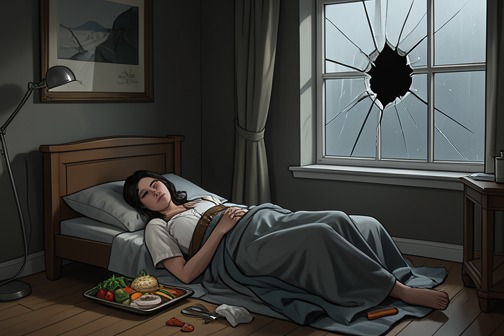
[Jane Smith](entity:character-recall-character-jane-smith-9c8f43913a78)’s death is both a murder discovered by [Will Robie](entity:character-recall-character-will-robie-49c73e14ccc9) and a revelation that changes the meaning of the wider investigation. At first, the scene offers only a room, a damaged window and Jane’s body; later, [Victoria Robie](entity:character-recall-character-victoria-robie-cfa30d6c2ee2) identifies Jane as her first child and confesses to killing her. The death connects a private family crime to a suspected pattern of paired killings across several states, while leaving a sharp distinction between the investigators’ developing theory and what [Victoria](entity:character-recall-character-victoria-fef24d0cf051) herself admits.
## Discovery and Immediate Circumstances
When Will enters Jane’s room, the light is on and a tray of food remains untouched beside the bed. His attention moves through the room and returns to the window, whose glass has a small hole at its center and cracks radiating outward. Jane is on the floor directly below it. The scene establishes a shooting without showing the act itself: the open, damaged window and the position of Jane’s body are the immediate evidence available to Will.
The discovery is presented through Will’s close attention to the room rather than through Jane’s point of view. The untouched food and the broken window give the scene concrete circumstances, but do not explain who entered, why Jane was killed, or what her life had been. At this stage, she is a victim in an unresolved investigation. The later account does not erase the discovery; it supplies the intention and family history that the room could not disclose.
## Connection to the Federal Investigation
Before Jane’s death is explained, [Jessica Reel](entity:character-recall-character-jessica-reel-8940da6dfd06) tells Will that her earlier account of investigating casinos was not entirely true. She is assigned to the Violent Criminal Apprehension Program, whose work includes serial-killer cases, and confirms that she and [Wurtzburger](entity:character-recall-character-wurtzburger-62dc79aa4b87) are investigating a suspected serial killer. Their inquiry began with the murders of [Sherman Clancy](entity:character-recall-character-sherman-clancy-e1eb33939f61) and [Janet Chisum](entity:character-recall-character-janet-chisum-d1bc41d9e78b) in [Cantrell](entity:location-recall-location-cantrell-34566b0c2c27), but the reported pattern extends beyond them.
The investigators identify eight other killings in four states over nine years. In the cases they are comparing, an older man and a younger woman were killed in roughly paired circumstances; the men had paid the women for sex, and the victims were disposed of in different ways. The summary gives the investigators a basis to compare cases, not proof that every murder has the same perpetrator. Jane’s death enters this larger account as one of the killings the [Federal Bureau of Investigation](entity:organization-recall-organization-federal-bureau-o-f1c5664278d2) is asking about, with the precise link between her case and the others still requiring explanation.
Timing complicates the pattern. When Reel learns that the Arkansas murders occurred four years earlier, she calculates that the other cases were separated by roughly eighteen months. She raises the four-year interval as potentially significant. She also asks whether the gap between the woman’s death and the older man’s killing was longer in this case than in the others; Wurtzburger says it was not. Will, meanwhile, acknowledges that his father had a possible motive to kill Clancy, but points out that this does not explain Janet’s murder. The exchange keeps motive, timing and victim relationships distinct rather than treating resemblance as a complete answer.
## Victoria’s Account
The investigation’s uncertainty changes when Victoria tells Will that he has met her first child: Jane Smith. Victoria says Jane was twenty, although she looked Victoria’s age. This disclosure reframes the identity of the woman found in the room. Jane is not simply another victim connected to the investigation; she belongs to the family history Victoria is explaining to Will.
Victoria admits that she killed Jane. She says [Emmitt Barksdale](entity:character-recall-character-emmitt-barksdale-25fd7e6314c2) told her which room Jane occupied and that she persuaded him she cared for Jane and wanted to take responsibility for her. Victoria then says she killed Emmitt and Jane. Her account makes Emmitt’s information part of the circumstances surrounding the murder, while her description of her earlier assurances reveals that her expressed intention to care for Jane concealed a plan to kill her. These are Victoria’s statements in the confrontation, not details independently demonstrated by the room itself.
Victoria offers a bleak justification, describing Jane as permanently at the level of a four-year-old and presenting death as a form of responsibility. Will rejects that reasoning: Jane did not deserve to die, and what had happened was not her fault. The exchange places Victoria’s claimed rationale beside Will’s insistence on Jane’s innocence. It does not turn the killing into an act of care; it exposes the distance between Victoria’s language of responsibility and her deliberate choice to end Jane’s life.
## The Pattern and Its Limits
When Will asks whether Victoria killed the other people the Federal Bureau of Investigation is investigating, her response strongly implicates her in those killings as well. She speaks of practice and repeats her contempt for older men and younger women, treating their deaths as an effort to rid the world of people she despises. She also accounts for the four-year interval after the Arkansas killings by describing the intervening events in her life: meeting Will’s father, marrying him, becoming pregnant and having Tyler. Her explanation connects the lull in the suspected series to a sequence of family events, though it is Victoria’s account rather than an independent reconstruction of every case.
Jane’s death therefore changes the investigation from a comparison of recurring circumstances into a confrontation with an identified killer’s family history and stated motives. The broad pattern helps explain why Reel and Wurtzburger are in Cantrell; Victoria’s confession supplies a direct account of Jane’s murder and implicates her in other killings. Yet the distinction between those kinds of evidence remains important. The damaged window and the body establish the immediate scene; Victoria’s later statements disclose the relationship, plan and claimed justification that the scene could not show.
Event 31
Willows attack and Tyler's abduction
The attack at [The Willows](entity:location-recall-location-the-willows-1a37147db7d9) turns an investigation centered on [Will Robie](entity:character-recall-character-will-robie-49c73e14ccc9)’s father into a crisis inside the Robie household. Will Robie and [Jessica Reel](entity:character-recall-character-jessica-reel-8940da6dfd06) find [Priscilla](entity:character-recall-character-priscilla-4c0f8c1856b2) dead, [Dan Robie](entity:character-recall-character-dan-robie-99bdd243c52e) injured, and [Victoria](entity:character-recall-character-victoria-fef24d0cf051) and [Tyler Robie](entity:character-recall-character-tyler-robie-51f90085dd8f) missing. The immediate search yields a clue linking the attack to [Sara Chisum’s murder](entity:event-recall-event-sara-chisum-s-murder-17e79b6c8936); later, Victoria’s account at the farm shack reveals that the disappearance was part of a plan to manipulate the investigation and target Will and Reel.
## Investigation Behind the Attack
Before the violence at The Willows, Reel explains that she is assigned to the Violent Criminal Apprehension Program, or ViCAP. The assignment is not, as she had initially suggested, simply about investigating casinos: the [Federal Bureau of Investigation](entity:organization-recall-organization-federal-bureau-o-f1c5664278d2) is examining a suspected serial killer. [Sherman Clancy’s murder](entity:event-recall-event-sherman-clancy-s-murder-d1bbc81a2d41) and [Janet Chisum](entity:character-recall-character-janet-chisum-d1bc41d9e78b)’s death in [Cantrell](entity:location-recall-location-cantrell-34566b0c2c27) have drawn attention because eight other killings across four states over nine years share a recurring pattern.
The victims were killed roughly in pairs: an older man and a younger woman whose relationship involved payment for sex. The older man was killed in his car, and the woman was shot and left in water. The similarities supply a basis for linking cases, but the spacing between them complicates that theory. Reel calculates that the killings had generally been about eighteen months apart, while the Arkansas murders occurred four years before the Cantrell cases. She notes that the longer interval might matter. The pattern is therefore a working investigative connection, not a complete explanation of every local murder.
The distinction matters to Will’s view of his father. Will acknowledges that Dan had a possible motive to kill [Sherman Clancy](entity:character-recall-character-sherman-clancy-e1eb33939f61), but [Wurtzburger](entity:character-recall-character-wurtzburger-62dc79aa4b87) points out that this does not account for Janet Chisum. Reel also asks whether the earlier cases involved a long delay between the woman’s death and the older man’s. The answer is that the gap was shorter elsewhere. The emerging series casts doubt on a simple account in which Dan’s grievance alone explains the Cantrell killings, while leaving the investigators to reckon with differences between the linked cases.
## Discovery at The Willows
When Will and Reel find Priscilla beside her bed, she is dead, and the knife used in the attack is still present. Will recognizes that the violence is recent and that the house is not secure: several people who should be there are unaccounted for. He and Reel run upstairs to Dan and Victoria’s bedroom. The room is empty, but a knocked-over table and broken lamp indicate a struggle. Tyler’s room is also empty, and his bed has not been slept in.
They find Dan in his study, on the floor near his desk, injured and trying to get up. Will and Reel hurry to him, and Will tells him to stay where he is while asking what happened. The discovery shifts the scene from a murder investigation to an urgent search for the missing members of the household. The attack has taken place among familiar rooms and personal belongings, but its immediate consequences are the death of Priscilla, Dan’s injury, and the disappearance of Victoria and Tyler.
## The Alert and the Vehicle Clue
An ambulance arrives at the same time as the police. [Sheila Taggert](entity:character-recall-character-sheila-taggert-d78c60d04e99) has contacted Will to say that she and [Sheriff Monda](entity:character-recall-character-sheriff-monda-57d4532bb463) are on their way, and an alert is issued for the Volvo and for Victoria and Tyler. The notice formalizes the immediate danger: the two missing people are now the focus of a search, while the vehicle provides investigators with a concrete lead.
Will returns with Reel to the garage and shows her a bullet hole in the Range Rover. He explains that the damage was made after he fired at a vehicle leaving the scene of Sara Chisum’s murder. The later hole could make investigators conclude that the Range Rover had been involved, rather than the vehicle Will actually fired at. A detail in Dan’s study helps Will recognize that something is wrong: among his father’s Dallas Cowboys memorabilia is a Saints sticker. The incongruity leads him to examine the vehicle and identify the altered evidence.
Will concludes that whoever shot Sara also took Victoria and Tyler. The hole has not simply recorded an earlier event; it has been created to misdirect the investigation. The clue connects the missing pair to the Chisum murder and shows that the person behind the attack has been shaping what investigators might believe. At this point, Will cannot explain why Priscilla was killed, and the scene leaves that question unresolved.
## Victoria’s Plan and the Serial Cases
Victoria’s later explanation at the shack recasts the disappearance. She says she had discreetly gathered information about the investigation and knew that Will suspected Dan. She also knew that Will and Reel had discovered the shack. Her plan depended on their expectations: if they did not come there, she intended to return appearing kidnapped and assaulted, with Tyler beside her, and offer a plausible account that the child could not contradict because he could not speak. She expected that Will and Reel would come, as they did, and described killing them as part of her plan.
In the same exchange, Will asks whether she killed the other people whose cases brought the Federal Bureau of Investigation to Cantrell. Victoria confirms that she did. She describes the earlier victims as part of the same pattern and explains that the interval before the Arkansas killings and the events in Cantrell encompassed meeting Dan, marrying him, becoming pregnant, and having Tyler. Her account turns the four-year gap from a possible complication into part of the chronology of her life with Dan.
The revelation changes the meaning of the attack. Victoria was not merely a missing person whose safety depended on the search; she had used the household’s apparent emergency to control what others would see and to put Will and Reel in danger. Tyler’s inability to speak was, in her plan, a means of making a fabricated account harder to challenge. The event thus brings together the private family crisis and the cross-state investigation: the clues at The Willows point toward the larger series, and Victoria’s later admission identifies her as the person behind it.
Event 32
Showdown at the Clancy Farm Cabin and Pearl River
The showdown at [Sherman Clancy](entity:character-recall-character-sherman-clancy-e1eb33939f61)’s farm shack and the confrontation associated with the [Pearl River](entity:location-recall-location-pearl-river-42196ab6760b) bring the murder investigation, [Victoria](entity:character-recall-character-victoria-fef24d0cf051)’s hidden identity, and the Robie family’s long estrangement to a single crisis. What begins as a search for an expected gunman becomes an exposure of Victoria’s role in the killings; what seems likely to end with Will’s death instead turns on Tyler’s sudden scream and Dan’s intervention.
## The investigation behind the confrontation
The danger at the shack is rooted in an investigation that had already widened beyond [Cantrell](entity:location-recall-location-cantrell-34566b0c2c27). [Wurtzburger](entity:character-recall-character-wurtzburger-62dc79aa4b87) disclosed that his assignment was with the Violent Criminal Apprehension Program, rather than simply an inquiry into casinos. Robie recognized that ViCAP handled serial-killer cases, and the agents confirmed that they were investigating a possible serial killer. Sherman Clancy’s death and [Janet Chisum’s murder](entity:event-recall-event-janet-chisum-s-murder-d7c02f7420d3) were linked, they explained, to eight other killings across four states during the preceding nine years.
Investigators described recurring similarities in the victims and circumstances: an older man and a younger woman were killed in roughly paired cases, with a paid sexual relationship connecting the pair. The repeated pattern gave the cases a possible common author, while differences in timing left questions open. Reel calculated that the killings had occurred at intervals of about eighteen months; the Arkansas murders, four years before, made the longer gap before the Cantrell cases noteworthy. She also asked whether the time between the woman’s death and the older man’s killing had been as long in the other cases. It had not been. The Cantrell deaths therefore fit an emerging pattern without matching it in every detail.
That uncertainty mattered to Will’s view of the case against his father. He conceded that Dan had a motive to kill Sherman Clancy, but pointed out that the motive did not extend to Janet. The investigation’s cross-state links raised a larger question: whether the Cantrell killings were separate acts arising from local grudges or part of the same sequence of paired murders. By the time Will and Reel reach the shack, that question has become inseparable from the danger waiting inside.
## Entry into the shack
Reel checked the other side of the door and signaled that it was the only way in or out. Will answered with a silent three-count. When his fingers were down, Reel kicked the door open and entered; Will followed. They began to search the room, then stopped when they saw Tyler sitting in a chair in its center.
The sight arrested Will. He was reminded of the child reaching toward his father, and for an instant he could not move. Reel called out to him, but the moment of hesitation had already mattered: a shot sounded, followed by the sound of someone falling. When a battery-operated camping lantern illuminated the room, the armed figure was not [Henry Barksdale](entity:character-recall-character-henry-barksdale-ae151328d8f5), the person Will had expected to find. It was Victoria. The reversal changes the scene from a search for an assailant into a direct confrontation with someone inside Will’s own family.
Victoria kept her gun trained on Will as she spoke. Her exchange with him also revealed a connection to [Laura Barksdale](entity:character-recall-character-laura-barksdale-ad28e86cce79): when Will insisted that Laura was dead at the mental facility, Victoria answered that Laura was dead in many respects but not in one important sense, and gestured to the proof before him. The revelation arrives in a room where Tyler is present, though the exchange does not fully explain the relationship. Its effect is immediate: Will is forced to reconsider both the identity of the person confronting him and the story he believed about Laura.
## Victoria’s account of the killings
Victoria confessed to befriending Janet and [Sara Chisum](entity:character-recall-character-sara-chisum-3d5dacb7eece) and killing them. She rejected the idea that Janet’s talk of making money from powerful people’s secrets explained the sisters’ deaths as Will understood it. Instead, she said that she herself had been the person who would give Janet money. After Janet died, Victoria told Sara that Sara’s father might have been the killer, urged her to leave Cantrell, and offered to help her. Victoria presented that apparent sympathy as part of a deception: she had used Sara’s grief and uncertainty to direct her, then arranged to meet her away from the clearing.
Victoria acknowledged that Will and Reel’s presence when Sara was killed had complicated her plan. She also explained how she had tried to make the Range Rover appear connected to the crime. She had put a bullet into the vehicle and covered the hole with a [New Orleans](entity:location-recall-location-new-orleans-ac6617a07d7e) Saints sticker, then fired into the Rover in Sherman Clancy’s garage to suggest that it had been used. The disguise contained a personal mistake: Dan supported the Cowboys, not the Saints. Victoria admitted that she had little time to clean the truck before Will and Reel arrived, and that she used Tyler running beneath the hose to distract them while she washed both cars. The ordinary household activity had helped conceal a hurried effort to manufacture evidence.
When Will asked about the other cases under [FBI](entity:organization-recall-organization-c3b9c0848e8c) investigation, Victoria claimed responsibility for those killings too. She connected the gap after the Arkansas murders to her meeting Dan, marrying him, and having Tyler. Her account joined the serial pattern to her family life: the interval was not a break in the story but, in her explanation, the time taken to build another identity and household. The FBI’s inquiry into repeated killings thus reaches directly into the home Will has returned to, making the apparent family refuge part of the concealment.
## Escape, gunfire, and aftermath
Victoria had anticipated that Will might come to the shack because he and Reel had kept her informed about the investigation, and she had made discreet inquiries herself. She knew they suspected her father and had learned about the location. She described an alternative plan: if they did not appear, she would have returned looking injured and disheveled, carrying Tyler and claiming that both had been abducted and assaulted. Since Tyler could not speak, she expected no contradiction from him. Her statement made clear that the child had been built into the plan as protection for her story, not simply left outside the conflict.
The confrontation shifted when Victoria aimed at Will and referred to Dan. Tyler then screamed, despite having been silent for nearly three years. The sound disrupted the moment long enough for Will to seize a piece of wood and throw it at her. When Victoria was knocked against the lantern and the room went dark, Will grabbed Tyler and fled through the doorway toward the woods. Tyler’s cry changes the meaning of his silence in the scene: it becomes an unexpected act that helps Will protect him and escape.
The final exchange ends in another shot. Will expected to be hit, but discovered blood on his face that belonged to Victoria; she fell, and the gun dropped from her hand. Injured, Will lifted the screaming Tyler. When he looked to the side, Dan was standing with a pistol. Will had expected Reel, not his father. Dan lowered the weapon, dropped it, and crossed the distance to embrace his sons, using what little strength he had left. The reunion follows a fatal shot fired between father and son, giving the encounter both a physical resolution and a family one.
The showdown resolves the immediate threat while disclosing the larger pattern behind the Cantrell murders: the Chisum sisters’ deaths were part of Victoria’s confessed series, and her apparently domestic role had helped hide that history. Its ending also turns on interrupted expectations. The expected gunman is not at the shack, Tyler does not remain silent, and Dan arrives when Will thinks Reel will. Violence exposes the family’s buried truths, but the final action is not another accusation or escape: Dan lays down his weapon and embraces his sons.
Event 33
Will Robie and Dan Robie Reconcile
[Will Robie and Dan Robie Reconcile](entity:event-recall-event-will-robie-dan-robie-e0b7fca1815a) is a family reckoning in which a history of wartime trauma and inherited cruelty is spoken aloud rather than passed over in silence. Dan explains how his father’s experience in [World War II](entity:time-recall-time-world-war-ii-d4353dde1684) shaped the household in which he grew up, then admits that he repeated aspects of that harm with Will. Will’s return to help him and his demand for the truth make possible a different ending: not a recovery of the years they lost, but a mutual decision to move forward together.
## The Photograph and the Family History
The conversation turns on a photograph Dan takes from his wallet. It shows Adam Robie, Will’s grandfather, in a United States Marine uniform: a young man with a granite jaw and a flinty expression. For Will, the image first presents an unfamiliar ancestor. Dan uses it to introduce the history behind the face and to explain why the man he remembers as a father was also a survivor of war.
Dan recounts that Adam fought across the Pacific, naming Guadalcanal, Kwajalein, Guam, Iwo Jima, and Okinawa. His company suffered a seventy-percent mortality rate, and Adam received many of the medals awarded to combat soldiers. Yet after returning home, he put those medals in a box and did not discuss the war. Dan says he learned the extent of his father’s actions from other people, not from Adam himself. The photograph therefore stands beside a conspicuous absence: military honors survived, but the story of what they represented did not become a family conversation.
Dan describes the life Adam had expected before the war: he was a farm boy from Arkansas who wanted to play baseball for the St. Louis Cardinals and marry his childhood sweetheart. Neither hope came true. After she married someone else, Adam married a woman he did not love, and Dan was born into a life shaped by choices made in the aftermath of war. The account does not present these losses as a complete explanation for Adam’s conduct; it shows the distance between the life he imagined and the life he returned to inhabit.
## War’s Aftermath and Repeated Harm
Dan explains that PTSD was not a term available to describe what Adam endured at the time. In his account, the men who fought in World War II were expected to return to civilian life as if years of war could be set aside. Adam could not simply reset. Dan recalls that his father seemed to mistake him for an enemy, attacking him with his fists and words and subjecting him to cruel mind games. On one occasion, Adam called him by a Japanese name. Dan describes the episode as evidence that his father was reliving the war, and remembers a once-strong man reduced by an experience he could neither discuss nor leave behind.
Dan also places his own experience against that of his father’s generation. He says returning veterans such as himself did not receive the same public welcome as the World War II soldiers; instead, he remembers hatred, disgust, and indifference. He recalls the disheartening contrast between years spent in jungles and coming home to little recognition. This comparison broadens the scene beyond one household: the war changed both Adam and Dan, though the circumstances and public responses surrounding their returns differed.
The most difficult turn comes when Dan connects that history to his treatment of Will. He acknowledges that while yelling at or roughing up his son, he could picture his own father doing the same to him. One part of him insisted he would never behave that way toward his child, while another part acted it out. Dan explicitly recognizes that the explanation does not make light of what he did. He also distinguishes his conduct from that of most veterans, who, he says, do not mistreat their children in this way, and calls himself weak rather than presenting the inheritance of trauma as an excuse.
## Dan’s Confession and Will’s Return
Dan’s account becomes more personal as he remembers Will’s standing in their community. Will had been a popular student, a sports star, and a good person who helped others without acting superior. Dan says he had every reason to be proud of him, and that part of him was. But he also admits to a competing feeling: jealousy that Will had the life Dan wanted and never had. Dan can only tentatively explain that he may have tried to ruin that life and make it more like his own; he does not claim clinical insight or certainty about his motives.
In naming that jealousy, Dan acknowledges both what he did and what it cost. He says Will had every right to hate him and recognizes the years they might have spent as a family as wasted. The confession does not undo those years or demand that Will excuse him. Instead, it makes the lost relationship part of the truth Dan had withheld, and lets Will hear his father take responsibility for the harm rather than leave it unexplained.
Will asks why Dan is telling him all this now. Dan points to actions as well as words: Will came back to help him and nearly got killed doing so. He also recalls that, on returning, Will asked for one thing—the truth. Dan treats those two facts as the reason the conversation has become necessary. His decision to speak is thus tied not to a sudden claim that the past has been repaired, but to Will’s demonstrated care and explicit request for honesty.
## An Apology and a Shared Future
After the confession, Will urges his father to look forward rather than remain fixed on the past. When Dan wonders what he has left, Will names [Tyler Robie](entity:character-recall-character-tyler-robie-51f90085dd8f) and then includes himself. Dan grips Will’s hand and apologizes; Will answers that both of them have things to regret, but that they need to move on together. The exchange shifts the scene from an account of inherited damage to a modest, shared commitment. It does not promise that reconciliation will erase the past; it establishes that neither man has to face what comes next alone.
Will puts his good arm around Dan’s shoulders, and the two men hold on to one another. Will’s eyes fill as well, marked as another first. [Jessica Reel](entity:character-recall-character-jessica-reel-8940da6dfd06), who has encouraged his response, wipes at her own eyes and then looks away to give father and son privacy. Her withdrawal keeps the final moment with the two Robies: the reconciliation is witnessed, but not intruded upon.
## Narrative Significance
The scene makes family history newly legible through a photograph, a withheld account, and an admission of repeated behavior. Adam’s silence about the war and Dan’s delayed explanation have left Will with the consequences but not the context. Dan’s testimony supplies that context while preserving his responsibility: the past helps explain the pattern, but he does not claim it absolves him. In that distinction, the scene treats telling the truth as a necessary act of accountability rather than a substitute for it.
The emotional change is measured rather than absolute. The years Will and Dan lost remain lost, and the conversation offers no evidence that every consequence of their estrangement has disappeared. What changes is the basis on which they can relate: Dan names his part in the harm, Will accepts a future that includes his father, and both men turn from regret toward action together. Jessica Reel’s final gesture reinforces the scene’s quiet scale. The resolution belongs not to a public declaration but to a hand held, an apology made, and a son’s arm around his father’s shoulders.